 |
|
Географически Таруса расположена в так называемой средней полосе России, в самом сердце европейской части страны. Город уютно расположился на севере Среднерусской возвышенности, в междуречье Оки и Протвы, двух, пожалуй, самых значимых рек Калужской области. Эта возвышенность, в свою очередь, является частью огромной Восточно-Европейской (Русской) равнины. Климат здесь умеренно континентальный, с тёплым летом и суровыми зимними стужами. Оттого природа здесь в каждый сезон играет своими собственными красками. Поэтому здесь мы поговорим об осенней Тарусе, какой её увидела именно я. Средняя полоса России не может похвастаться растительным разнообразием. Это зона смешанных и широколиственных лесов, поэтому для привычного глаза жителей этого региона мы не видим в природе чего-то необычного ― даже на клумбах. Но это не значит, что привычная природа не имеет своего собственного обаяния. И внимательный взгляд всегда может заметить прекрасное даже в привычном, хотя обычно в суете повседневной жизни нам как-то некогда замечать это прекрасное. Тем и хороши небольшие поездки за пределы родного города, чтобы новым взглядом посмотреть на то, что, с одной стороны, хорошо знакомо, с другой ― дарит некое отдохновение от привычных пейзажей рабочих будней. Таруса сейчас представляет собой маленький, симпатичный и ухоженный городок, в котором у жителей есть понимание прекрасного. Особенно радует, что в городе полно энтузиастов, которые сами хотят, чтобы их город хорошо выглядел, причём, это они делают не из какой-то показухи, а прежде всего сами для себя, поскольку красота для себя ― это прежде всего проявление уважения к самому себе, что очень важно в нынешнее время, когда коммерческий дух то и дело пытается вырвать пальму первенства у существования с надматериальными интересами. Так что нам, заезжим зрителям, остаётся только любоваться этой аккуратной и скромной красотой.
* * *
Geographically, Tarusa is located in the so-called middle zone of Russia, in the very heart of the European part of the country. The town is situated in the north of the Central Russian Upland, in the interfluve of the Oka and the Protva, two perhaps the most significant rivers of Kaluga Oblast. This upland, in turn, is part of the vast East European (Russian) Plain. The climate here is moderately continental, with warm summers and severe winter colds. That is why nature here displays its own unique colors in every season. Therefore, here we will talk about autumn Tarusa, as I saw it. Central Russia cannot boast of plant diversity. It is a zone of mixed and broad-leaved forests, so for the accustomed eye of the residents of this region we do not see anything unusual in nature — even in flower beds. But this does not mean that familiar nature does not have its own charm. And an attentive gaze can always notice the beautiful even in the familiar, although usually in the bustle of daily life we somehow have no time to notice this beautiful. That is what small trips outside one's hometown are good for: to look with a new eye at what, on the one hand, is well familiar, and on the other hand, gives a certain respite from the usual landscapes of working days. Tarusa today is a small, pretty and well-kept town, in which the residents have a sense of beauty. It is especially pleasing that the town is full of enthusiasts who themselves want their town to look good. And moreover, They do this not out of some kind of ostentation, but primarily for themselves, since beauty for oneself is, first and foremost, a manifestation of self‑respect — which is very important in today’s world, when the commercial spirit constantly tries to wrest the lead from non‑material interests. So for us, visiting spectators, all that remains is to admire this neat and modest beauty.
2026
|
|
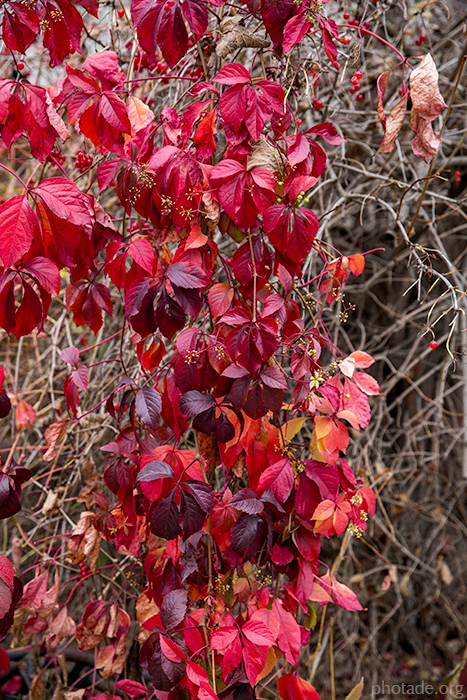
• 1 • Дикий (он же девичий) виноград. Когда ему хорошо, он всегда выпускает много плодиков (несъедобных). Wild grape (also known as Parthenocissus). When it is doing well, it always produces lots of little (inedible) berries. |
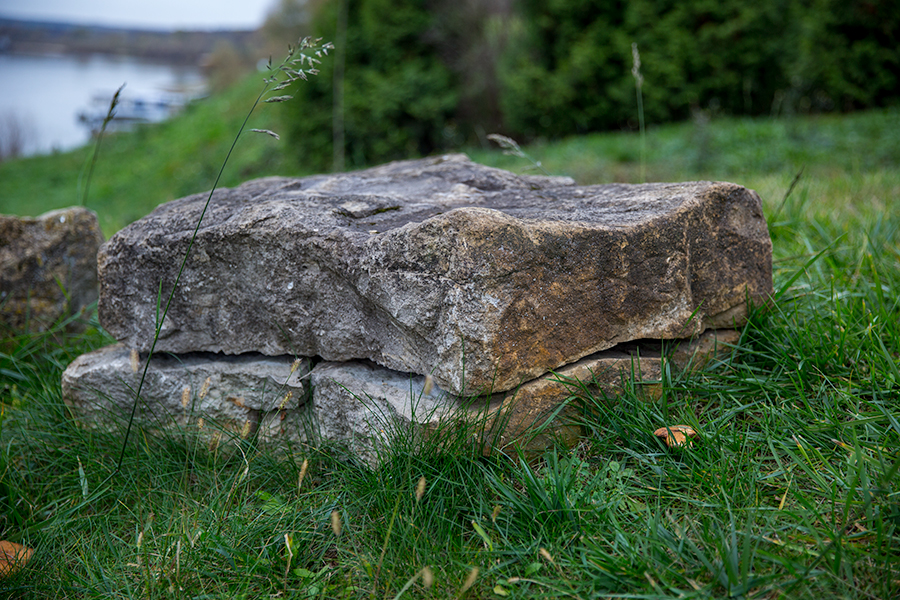
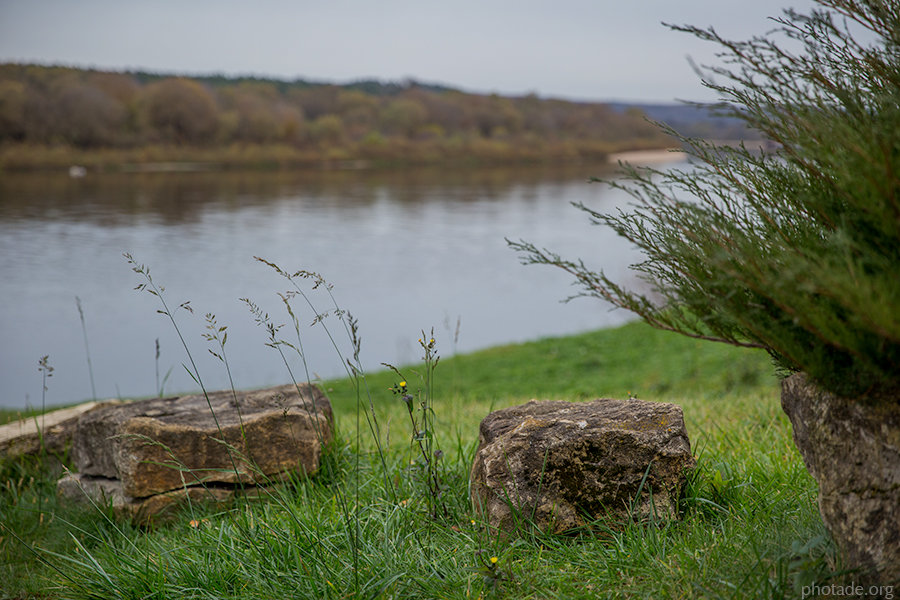 • 2 • Плиты песчаника как декор прибрежной зоны. Sandstone slabs as coastal decor. |
|
• 3 • Около 300 миллионов лет назад на месте современной Тарусы было дно моря. Эти плоские камни ― свидетельства тех далёких событий. About 300 million years ago, the site of present-day Tarusa was the bottom of a sea. These flat stones are evidence of those distant events. |
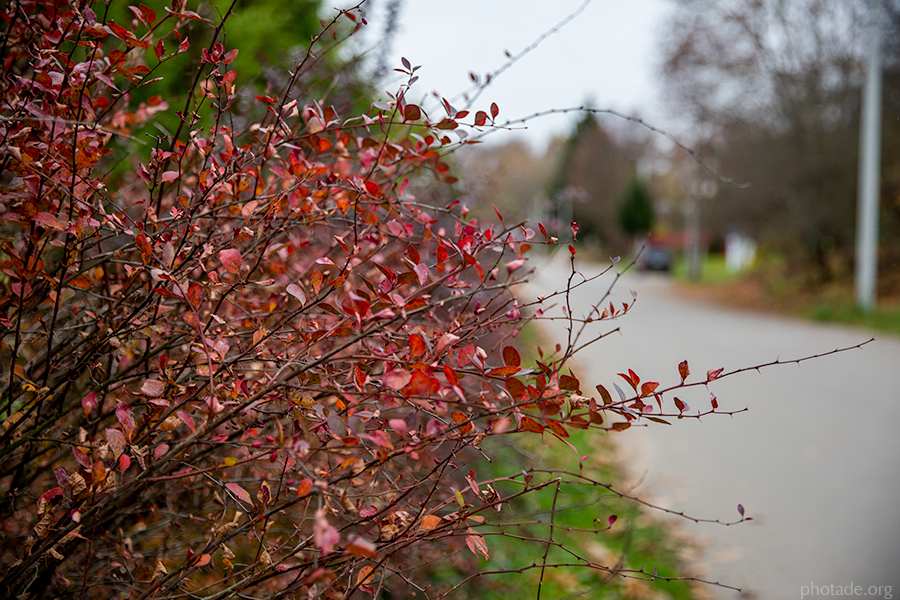 • 4 • Осенний барбарис. Autumn barberry. |
|
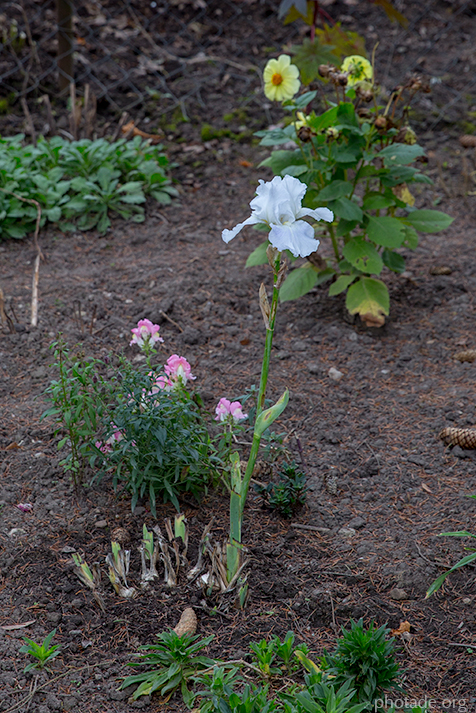
• 5 • Цветущий ирис в октябре ― это что-то по-настоящему необычное. Найден на клубах местной энтузиастки по выращиванию растений Раисы Максимовны. A blooming iris in October is something truly unusual. Found in the flower beds of a local plant-growing enthusiast, Raisa Maksimovna. |
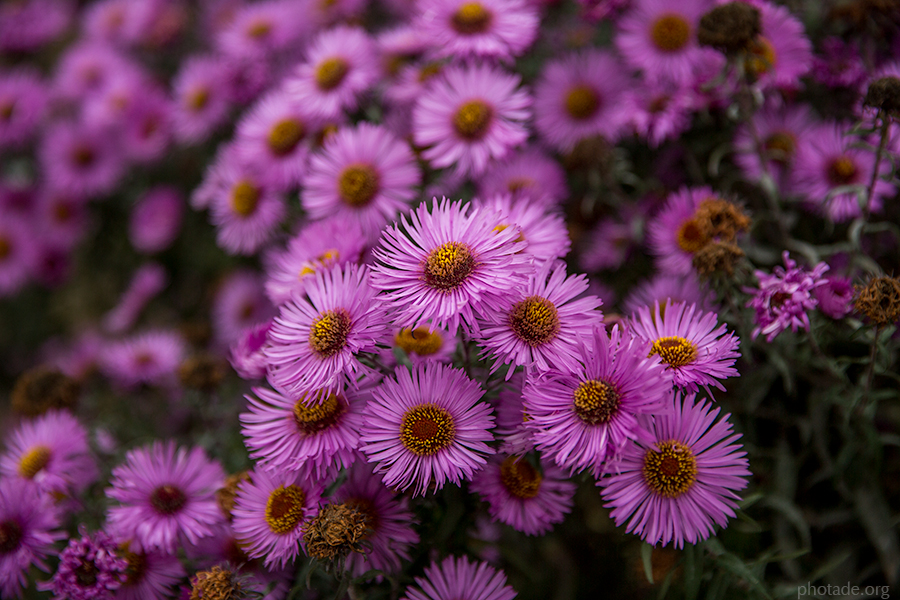
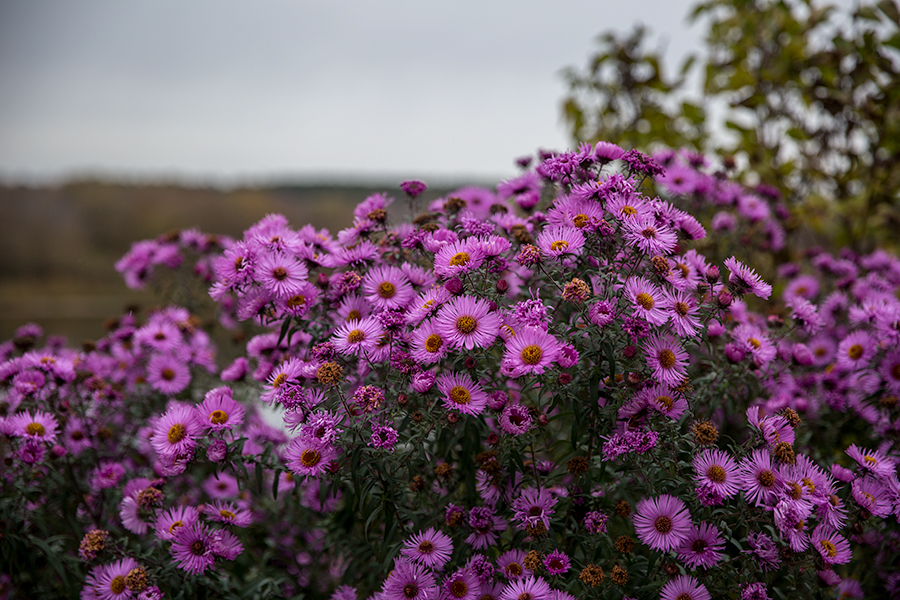 • 6 • Осенняя астра. Скорее всего сорт «новоанглийская», потому что растет вдоль дорожек огромными пышными кустами-букетами. Autumn aster. Most likely the "New England" variety, because it grows along the paths in huge lush bush-bouquets. |
|
• 7 • Интересно, что в народе такие астры называют по времени цветения: сентябринками (в более северных широтах) или октябринками (на югах). Interestingly, among the people such asters are called by their flowering time: "sentyabrinka" (in more northern latitudes) or "oktyabrina" (in the south). |
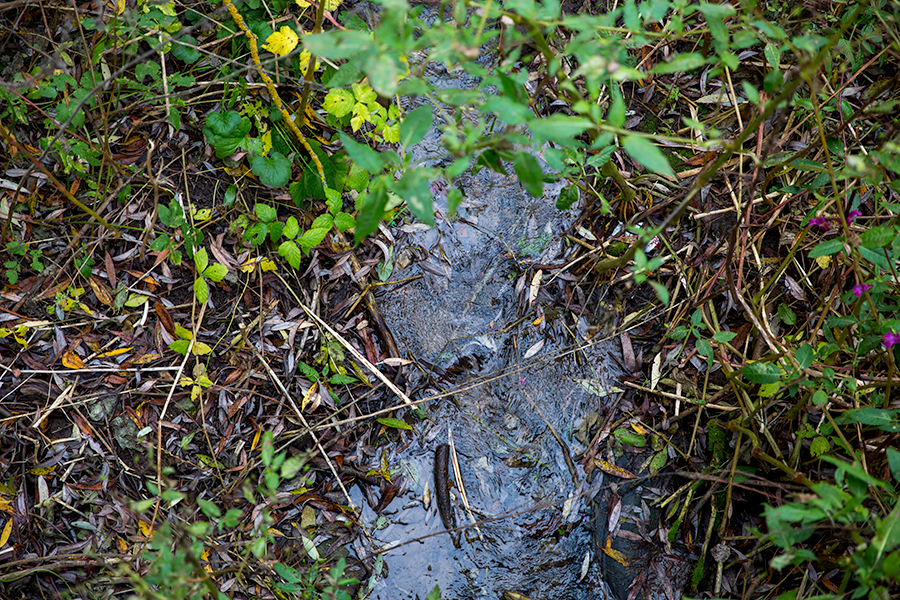 • 8 • Ручей в Игумновом овраге. Igumnov ravine stream. |
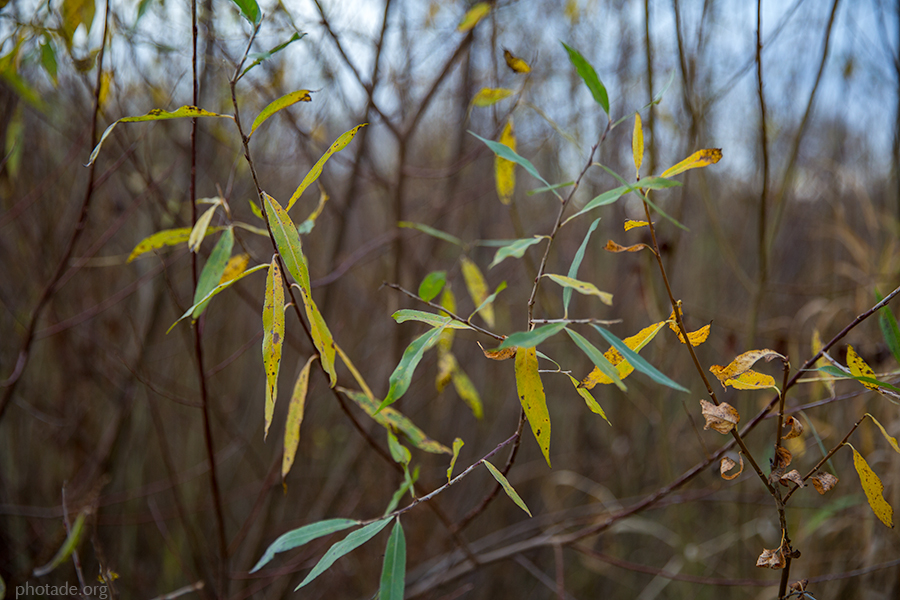
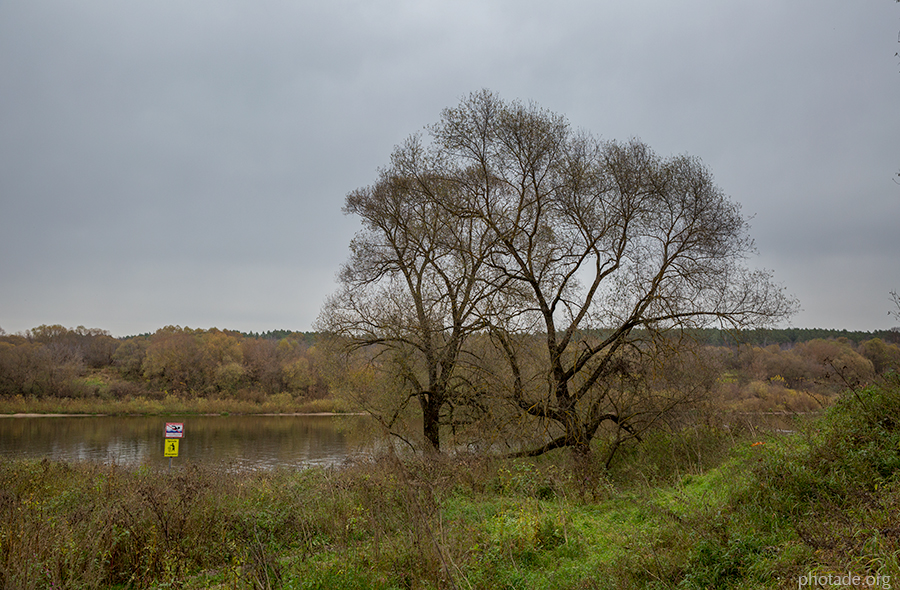 • 9 • Старые ивы. Old willows. |
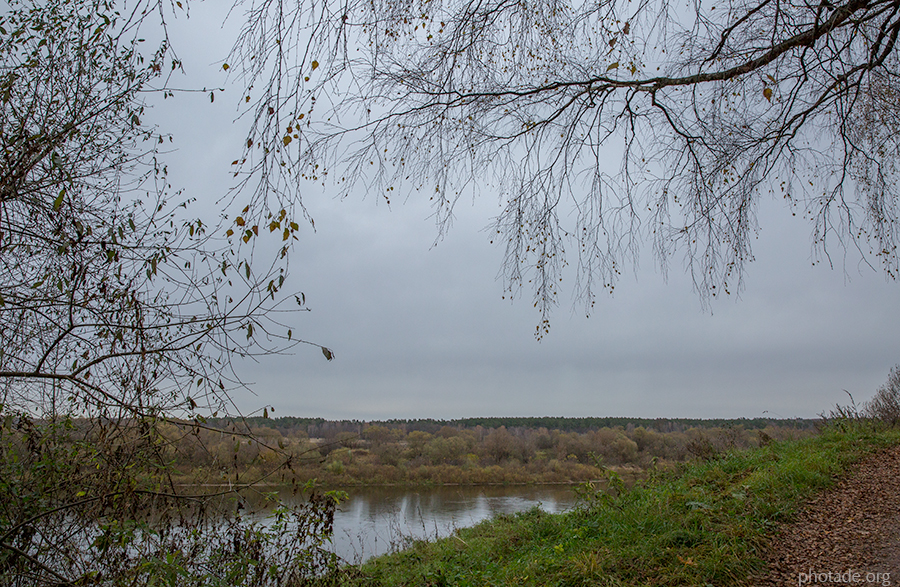 • 10 • Русские просторы над Окой. Russian expanses over the Oka. |
|
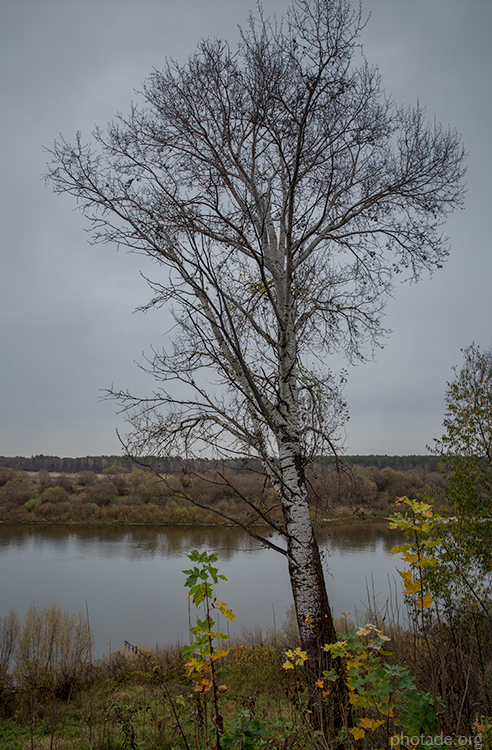
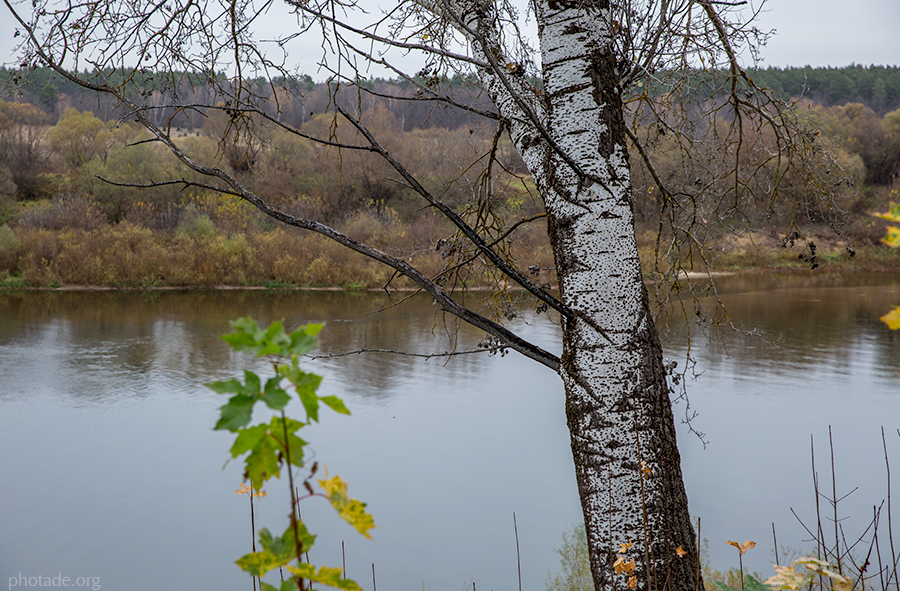
• 11 • Тополь белый над рекой в окружении своей корневой поросли. Если поросль вовремя не обрубать, через несколько лет тут будет роща белых тополей, которые на самом деле будут представлять собой единый суперорганизм. A white poplar over the river surrounded by its root suckers. If the suckers are not cut off in time, in a few years there will be a grove of white poplars here, which in fact will represent a single superorganism. |
|
• 12 • Сначала мы подумали, что это берёза, и это довольно распространённая ошибка. Но ещё интереснее, что лопастные листья поросли этого тополя похожи на листья клёна. At first we thought it was a birch, and this is a fairly common mistake. But even more interesting is that the lobed leaves of the suckers of this poplar resemble maple leaves. |
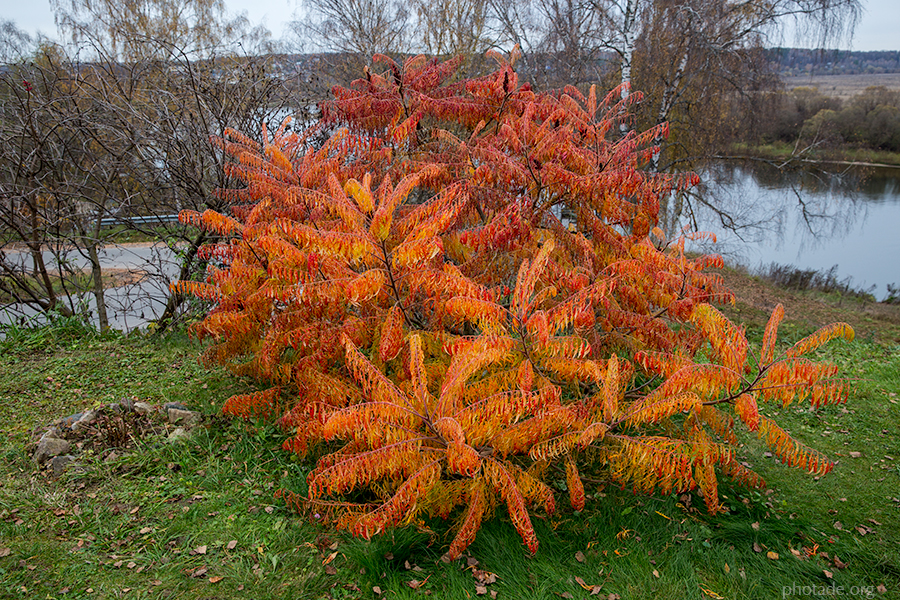 • 13 • Сумах пушистый (он же уксусное дерево) ― гость из Северной Америки. В Калужской области это декоративное растение очень распространено. Staghorn sumac (also known as vinegar tree) is a guest from North America. In Kaluga Oblast this ornamental plant is very widespread. |
|
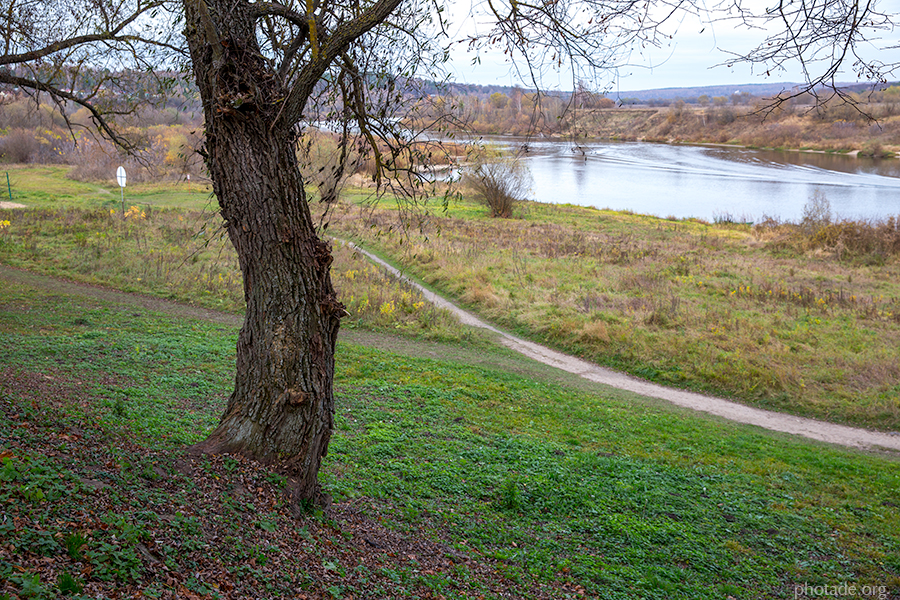
• 14 • Набережной в Тарусе нет, но она и не нужна, потому что вдоль берега полно аккуратных дорожек, по которым гулять, возможно, даже приятнее. There is no embankment in Tarusa, but it is not needed either, because along the bank there are plenty of neat paths, along which walking is perhaps even more pleasant. |
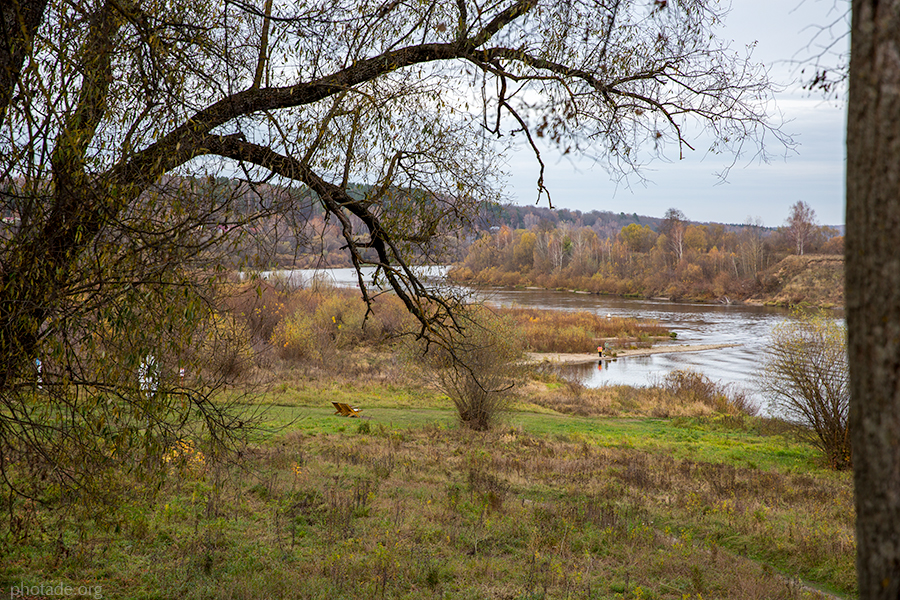 • 15 • Краски октября. October colors. |
|
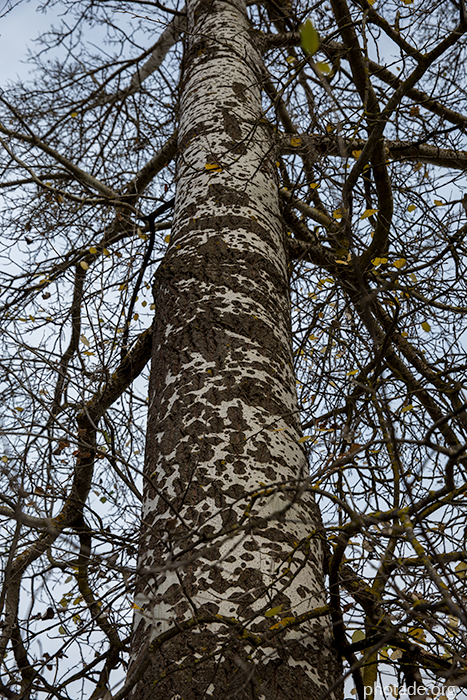
• 16 • Ещё один тополь с мощным стволом. Вдоль берега, кстати, много старых деревьев. Another poplar with a powerful trunk. Along the bank, by the way, there are many old trees. |
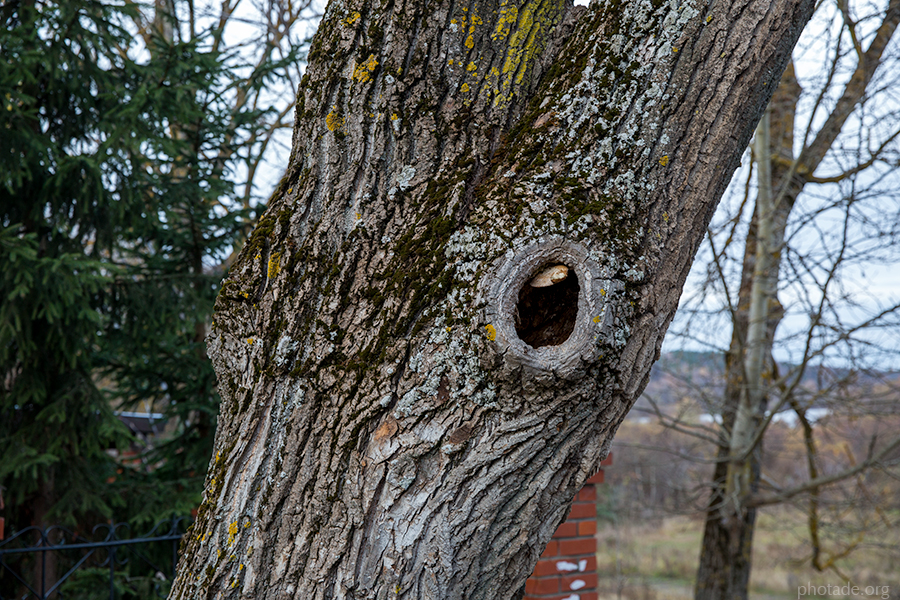 • 17 • Дупло в старой иве, возникшее на месте когда-то очень давно отломившейся (или обрубленной) ветки, окружено характерным валиком-каллюсом. В дупле вырос древесный гриб. A hollow in an old willow, which appeared in the place of a branch that broke off (or was cut off) a very long time ago, is surrounded by a characteristic callus roll. A tree fungus has grown in the hollow. |
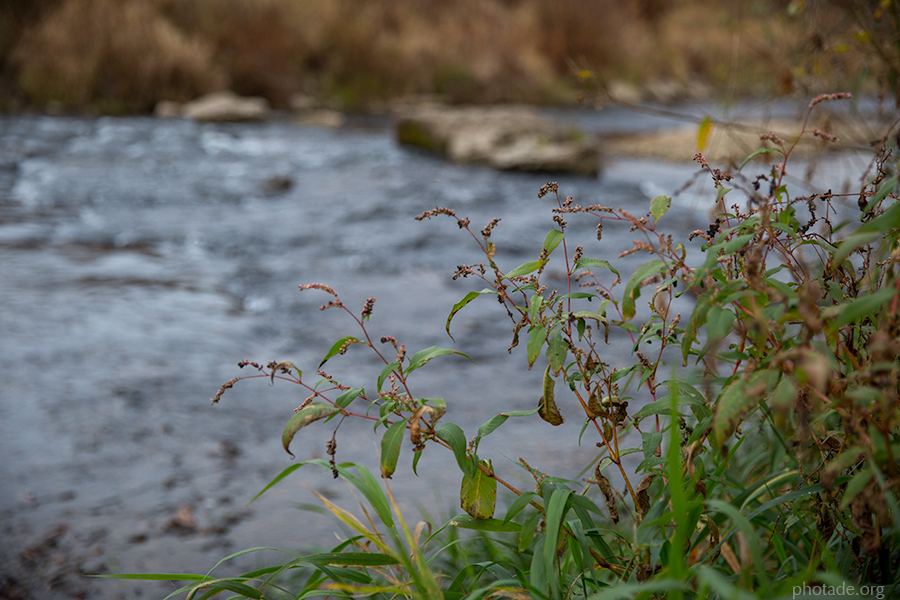 • 18 • Одно из самых распространённых растений в наших широтах, любящих влагу ― горец перечный (его ещё называют водяным перцем), на берегу речки Тарусы. One of the most widespread moisture-loving plants in our latitudes — Persicaria hydropiper (also called water pepper) — on the bank of the Tarusa River. |
|
• 19 • Октябрьские краски ивовой поросли на косе в устье Тарусы. October colors of the willow thicket on the spit at the mouth of the Tarusa River. |
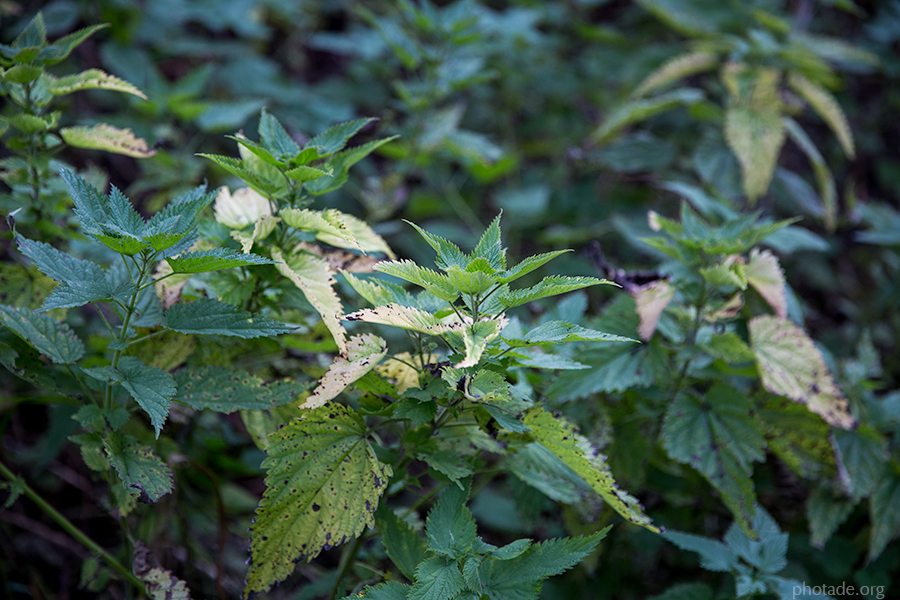 • 20 • Крапива ― одно из немногих растений наших широт, которое будет пытаться сохранять зелень до последнего (т.е. до первых заморозков). Кстати, зимой её корневище в земле остаётся живым. Nettle is one of the few plants of our latitudes that will try to keep its green until the last (i.e., until the first frosts). By the way, in winter its rhizome remains alive in the ground. |
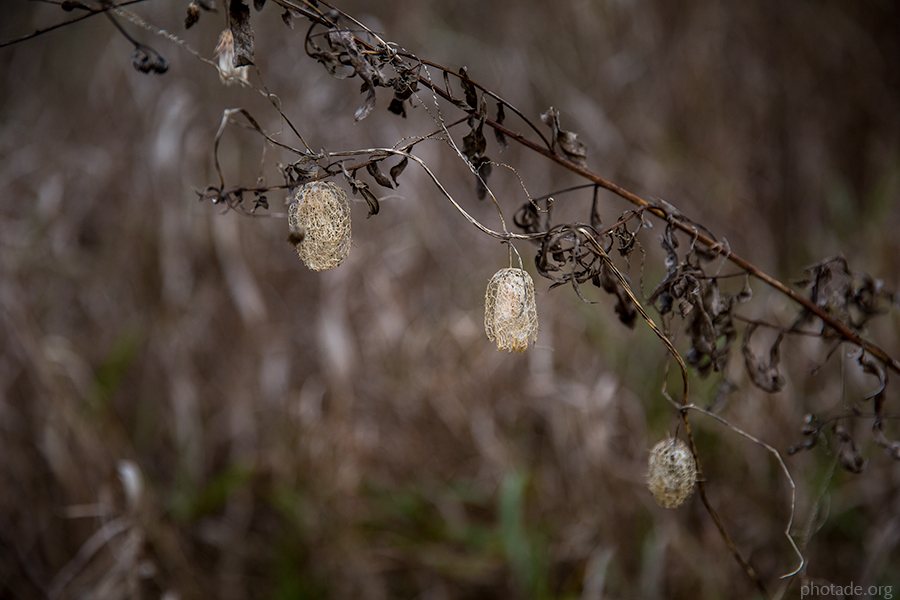 • 21 • Симпатичные ажурные фонарики, оставшиеся от плодов колючеплодника лопастного (более известного под названием «бешеный огурец»). Pretty lacy lanterns left over from the fruits of the Echinocystis lobata (better known as the “wild cucumber”). |
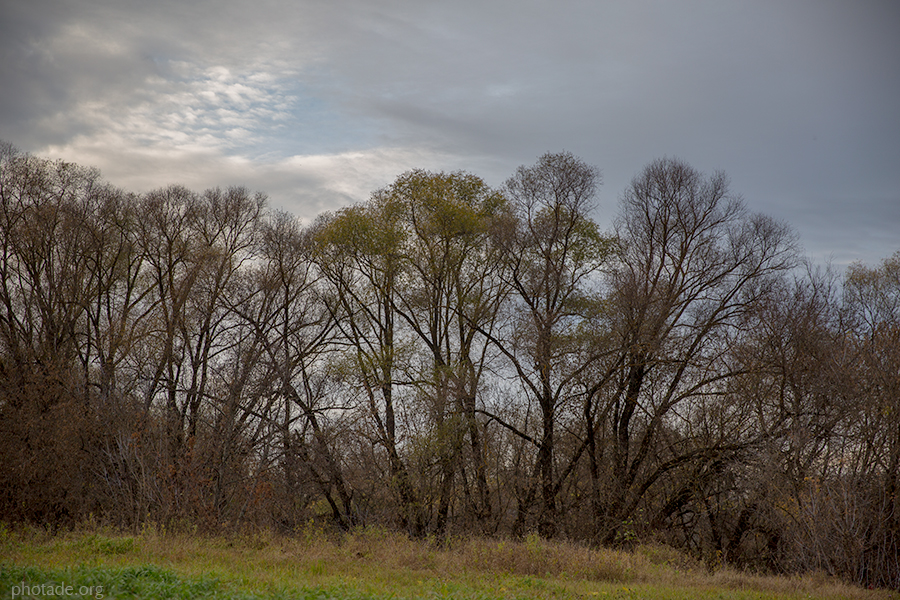 • 22 • Ивовые заросли на берегу Тарусы. Willow thickets on the Tarusa bank. |
|
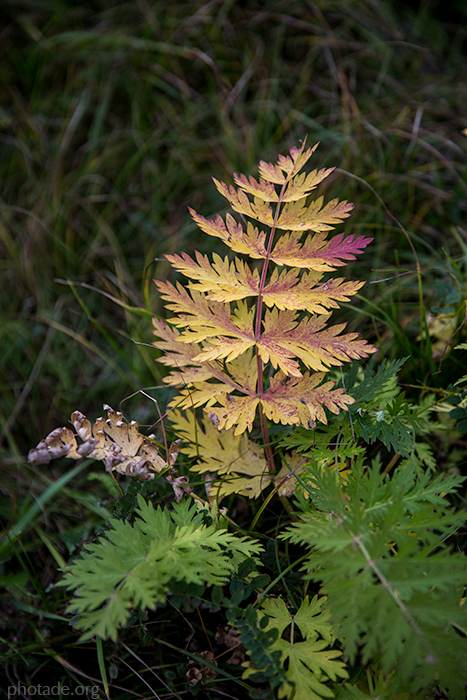
• 23 • Что за растение ― сказать трудно, можно предположить, что это что-то из зонтичных, но интересно, какими красками это растение встречает осень. It is hard to say what plant this is. We can assume it is something from the umbellifer family, but it is interesting with what colors this plant meets autumn. |
|
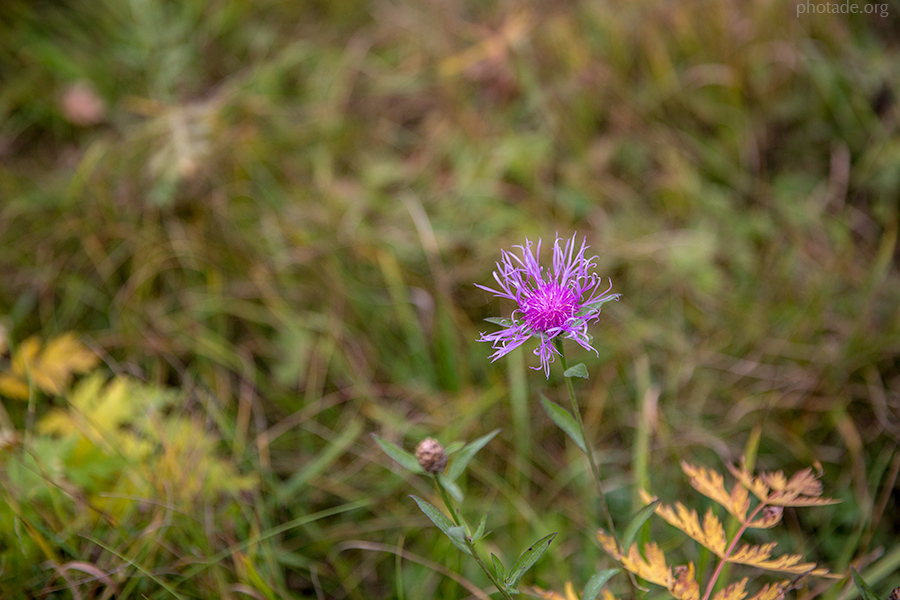
• 24 • Василёк луговой. Цветок, принадлежащий к семейству астровые ― одному из самых широко представленных семейств в наших широтах. Brown knapweed. A flower belonging to the Asteraceae family — one of the most widely represented families in our latitudes. |
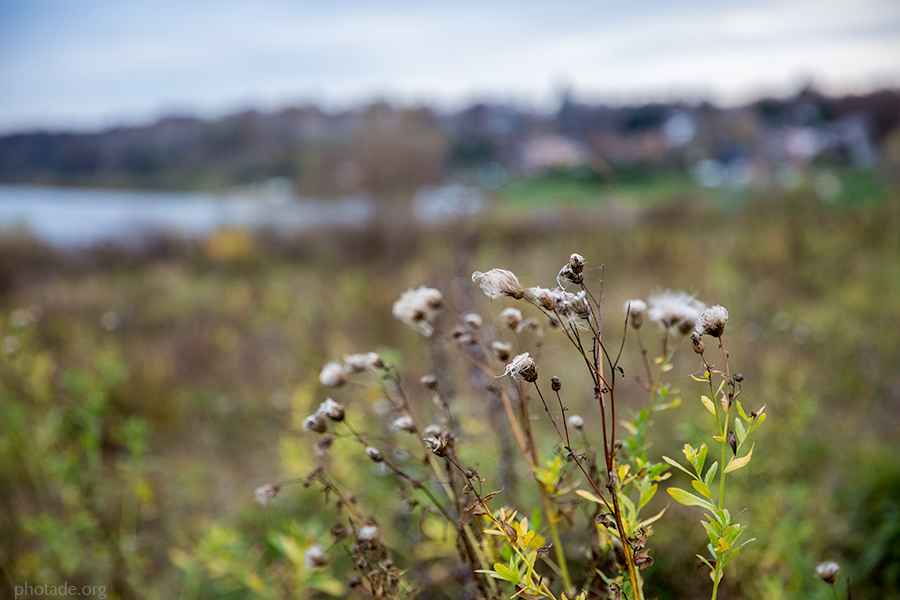 • 25 • Созревшие соцветия бодяка полевого (он же осот розовый, который в таком виде, разумеется, уже совсем не розовый). Очень распространённый сорняк. Ripe flower heads of the field thistle (also known as pink sow-thistle, which in this form, of course, is no longer pink at all). A very common weed. |
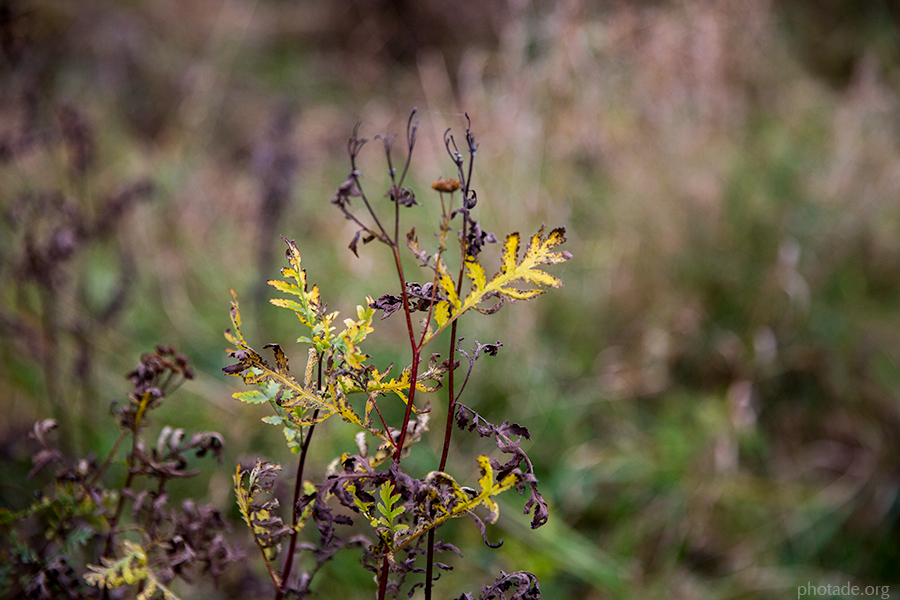 • 26 • Осенняя палитра увядающей пижмы. Autumn palette of fading tansy. |
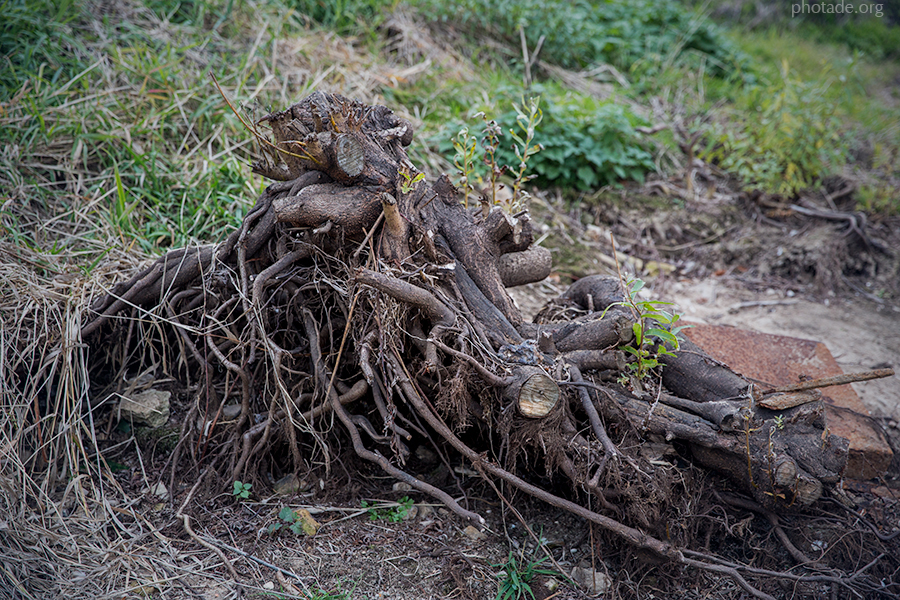 • 27 • Коряга ивы на берегу Оки. Интересно, что эти корни ещё местами живы, так как есть молодые побеги. Но так будет, скорее всего, недолго. A willow snag on the Oka bank. Interestingly, these roots are still partly alive, as there are young shoots. But most likely this will not last long. |
|
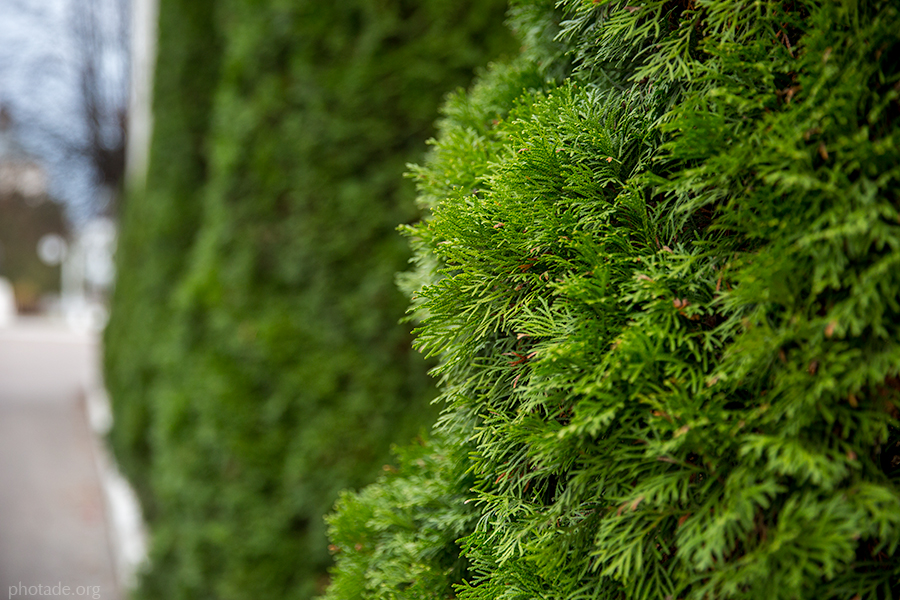
• 28 • Туи на улице Ленина. Thujas on Lenin Street. |
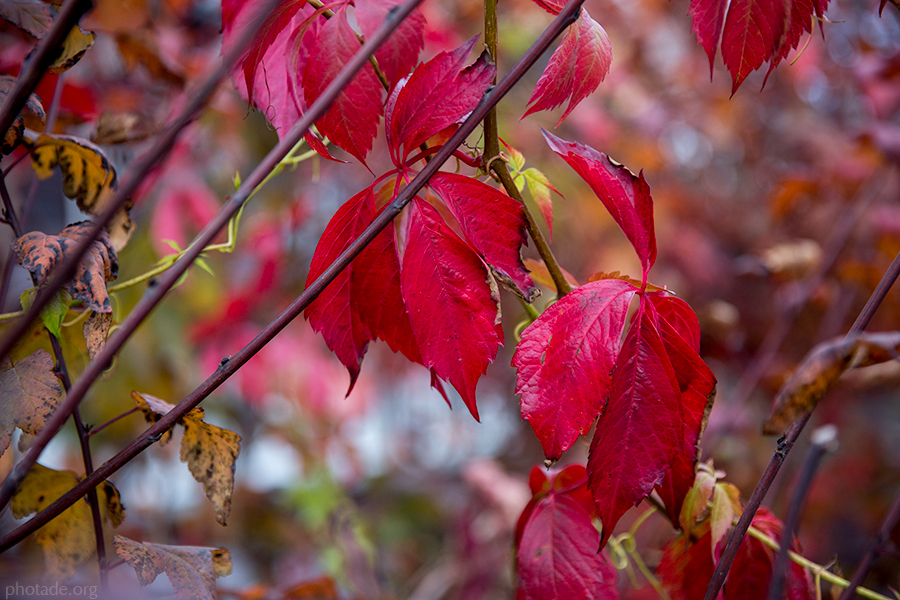 • 29 • Нарядные краски дикого винограда. Festive wild grape colors. |
|
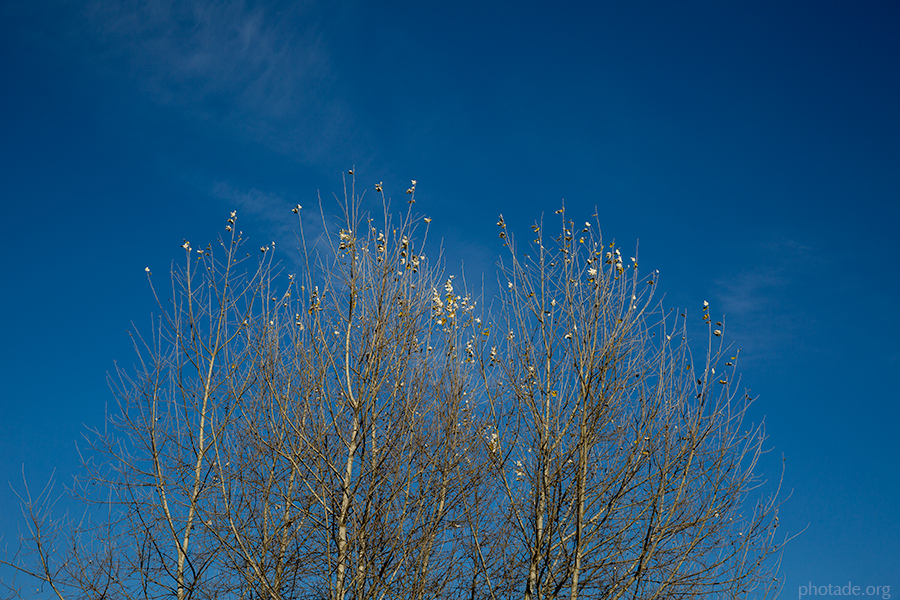
• 30 • Звенящие тополя над небом, цвет которого свидетельствует о чистоте воздуха. А воздух в Тарусе и впрямь чист и свеж, ради чего сюда точно стоит ехать. Rustling poplars against the sky, whose color testifies to the purity of the air. And the air in Tarusa is indeed clean and fresh, which is definitely a reason to come here. |