 |
|
Климат в Камбодже — влажный, тропический. Среднегодовая температура около 25°С. Прохладнее всего в декабре-январе, для европеоида это самое комфортное время пребывания в Камбодже. Самый жаркий месяц — апрель, детей в это время даже на каникулы отправляют, ибо жарко даже для местных. А после жары начинается сезон дождей — в июле здесь такие ливни, что улицы периодически становятся реками. Правда, атмосферу это не сильно освежает, и в итоге жара сохраняется довольно долго, пока она вновь не спадёт в зимние месяцы. При этом в Камбодже нет ярко выраженной смены температуры в течение суток, тут нет понятия «вечерняя или ночная прохлада». Ночью тут также жарко, как и днём, просто кто-то вдруг резко выключил свет (сумерек в Камбодже тоже, считай, нет, что, впрочем, обычно для регионов, близких к экватору). Всё описанное выше создаёт достаточно комфортные условия для растений: тепло и влажно. Поэтому цветочки, которые в наших северных широтах растут только в домашних горшках на подоконниках, здесь прекрасно себя чувствуют на открытом воздухе. А так как в Камбодже нет резко выраженной смены года, цветение здесь у растений наблюдается практически круглый год. Правда, в разные сезоны цветут разные растения, поэтому цветущие лотосы мне так и не удалось поснимать, хотя большие лужи с характерными лопухами тут можно встретить буквально на каждом углу. Но не лотосами едиными богата местная флора. Зато сфотографировала другие растения, большинство из которых действительно красивы. Цветут тут в основном лианы, деревья и кустарники. Клумбы часто устраивают из растений с разноцветными листьями. В столице встречаются иногда розовые кусты, но выглядят они не очень, поэтому не стала их фотографировать — здесь гораздо интереснее те растения, что раньше никогда не видел. Палитра представлена самая разнообразная, хотя можно выделить преимущество за красными оттенками различной степени интенсивности. Много белых цветов. И всё это очень красиво смотрится на фоне яркой сочной листвы. Короче, Камбоджа — типичная тропическая страна со всеми вытекающими.
* * *
The climate in Cambodia is humid and tropical. The average annual temperature is about 25°C. The coolest time is in December and January, which is the most comfortable time for a Caucasians. The hottest month is April, and children are even sent on vacation at this time, because it's hot even for locals. And after the heat, the rainy season begins — in July there are such showers that the streets periodically become rivers. However, this does not refresh the atmosphere much, and as a result, the heat persists for quite a long time until it subsides again in the winter months. At the same time, in Cambodia there is no pronounced temperature change during the day, there is no concept of "evening or night coolness". It's just as hot here at night as it is during the day, it's just that someone suddenly turned off the lights (there's no twilight in Cambodia either, which, however, is common for regions close to the equator). All of the above creates quite comfortable conditions for plants: warm and humid. Therefore, the flowers, which in our northern latitudes grow only in home pots on window sills, feel great outdoors here. And since there is no pronounced change of year in Cambodia, plants bloom here almost all year round. However, different plants bloom in different seasons, so I never managed to take pictures of blooming lotuses, although large puddles with characteristic burdocks can be found here literally on every corner. But the local flora is not rich in lotuses alone. I photographed other plants, most of which are really beautiful. Mainly lianas, trees and shrubs bloom here. Flower beds are often made from plants with colorful leaves. There are sometimes rose bushes in the capital, but they don't look very good, so I didn't take pictures of them — those plants that I've never seen before are much more interesting here. The palette is very diverse, although it is possible to notice the advantage of red shades of varying degrees of intensity. Lots of white flowers. And all this looks very beautiful against the background of bright juicy foliage. In short, Cambodia is a typical tropical country with all the consequences. 2016 /2026
|
|
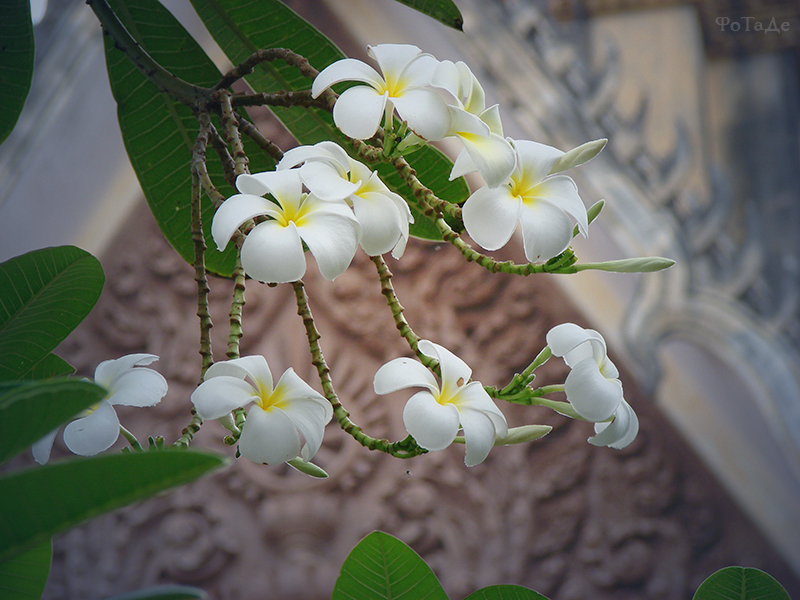
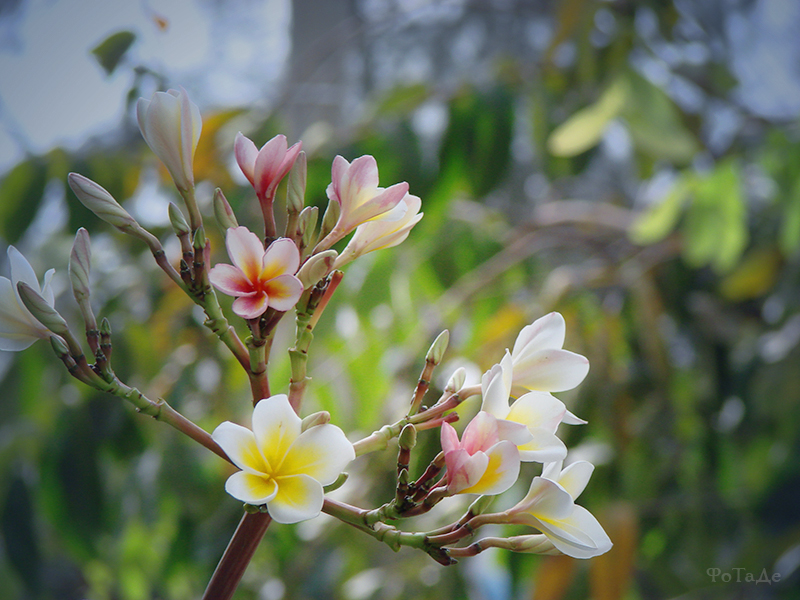
1. Плюмерия тупая (плюмерия по-кхмерски Phka Champei, где слово «phka» - цветок, поэтому ниже оно будет часто встречаться). Это красивое растение очень почитается в самой Камбодже, являясь символом красоты и грации. Цветы плюмерии девушки иногда используют для украшения волос. Plumeria obtusa (plumeria in Khmer - Phka Champei, where the word "phka" means flower, so it will often occur below). This beautiful plant is highly revered in Cambodia itself, being a symbol of beauty and grace. Plumeria flowers are sometimes used by girls to decorate their hair. |
|
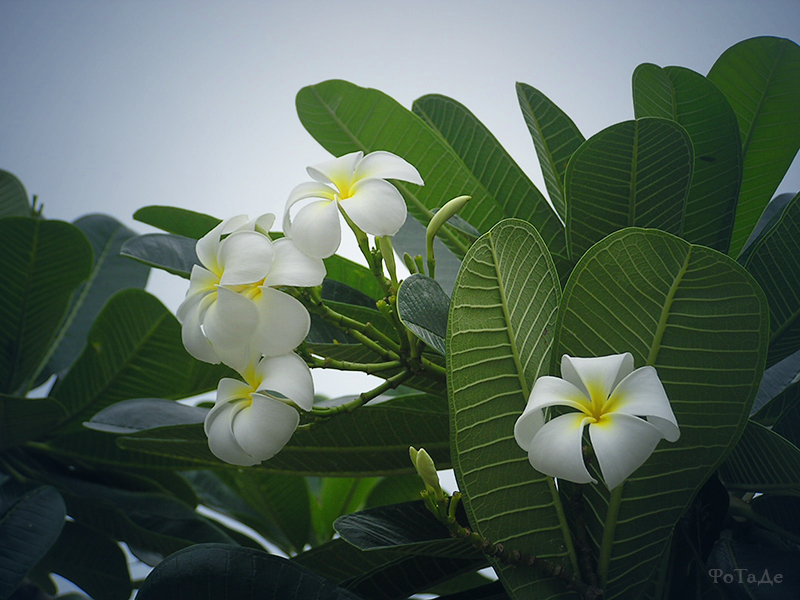
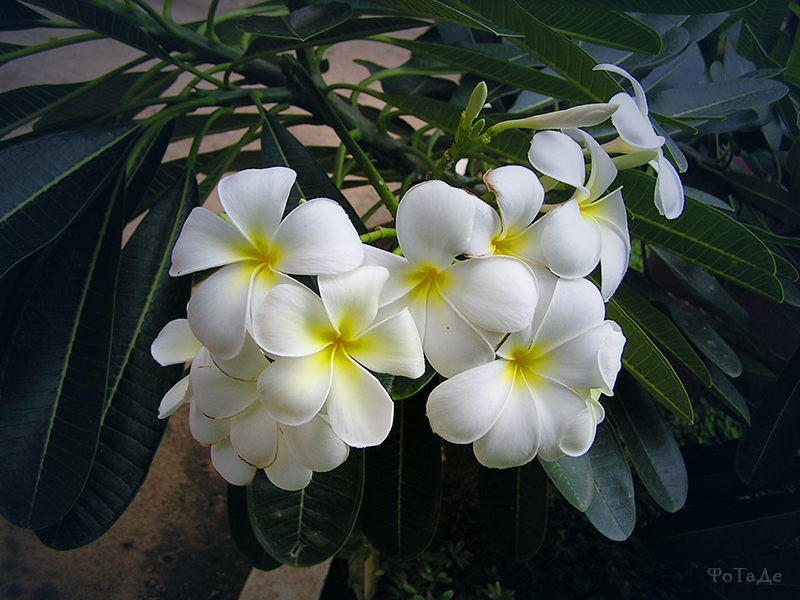
2. Плюмерия тупая. Здесь хорошо видно закруглённые листья, из-за чего этот вид так назвали. Plumeria obtusa. The rounded leaves are clearly visible here, which is why this species was so named. |
|
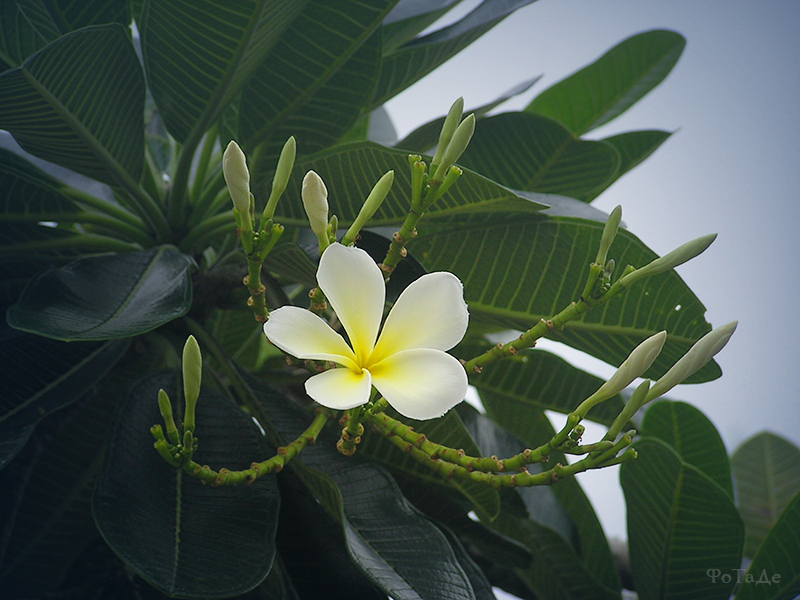
3. Плюмерия тупая с бутонами. Plumeria obtusa with buds. |
|
4. Красная плюмерия (по-кхмерски Champei Krahom, что переводится как «красная плюмерия»). Интересно, что разные источники называют разное количество видов плюмерии (кто-то 10-12, кто-то до 70-ти). Можно сказать, что в основном видов чуть более десятка, а дальше начинаются гибриды, так как это растение широко культивируется в тёплых странах. Red plumeria (Champei Krahom in Khmer, which translates as "red plumeria"). Interestingly, different sources name a different number of plumeria species (some 10-12, some up to 70). We can say that there are basically a little more than a dozen species, and then hybrids begin, since this plant is widely cultivated in tropical countries. |
|
5. Это тоже фото плюмерии. Причём, здесь заметно разнообразие оттенков. This is also a photo of a plumeria. There is a noticeable variety of shades. |
|
6. Плюмерия тупая. Сами цветы вообще-то очень милые, поэтому русское указание вида как «тупая» грубовато звучит. Plumeria obtusa. The flowers themselves are actually very cute, so the Russian designation of the species sounds rude (in Russian, the word "obtusa" is consonant with the word "dumb", which means "stupid"). |
|
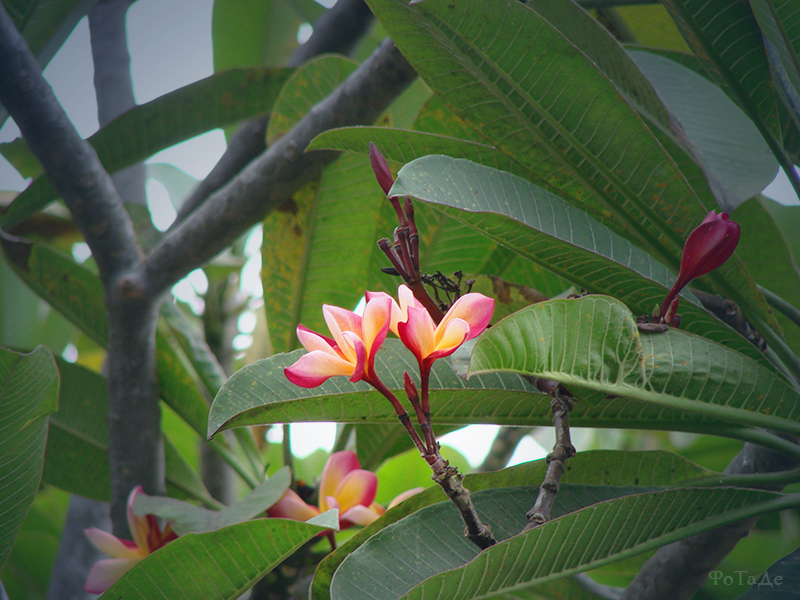
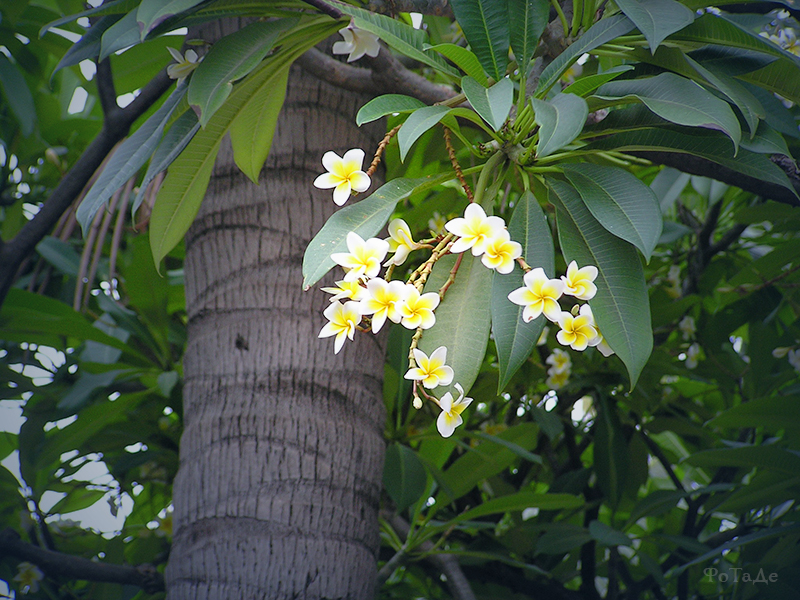
7. Плюмерия красная. Да-да, несмотря на цвет цветов, это не плюмерия белая (у которой листья узкие), и не плюмерия тупая, у которой листья закруглённые, а именно что красная, просто у этого вида много разновидностей, включая бело-жёлтые цветочки. Также здесь интересный ствол: как будто это пальма какая-то. The red plumeria (Plumeria rubra). Yes, despite the color of the flowers, it is not a white plumeria (which has narrow leaves), and not a plumeria obtusa, which has rounded leaves. This is exactly red plumeria. This species has many varieties, including yellow-white flowers. There's also an interesting trunk here: it looks like it's some kind of palm tree. |
|
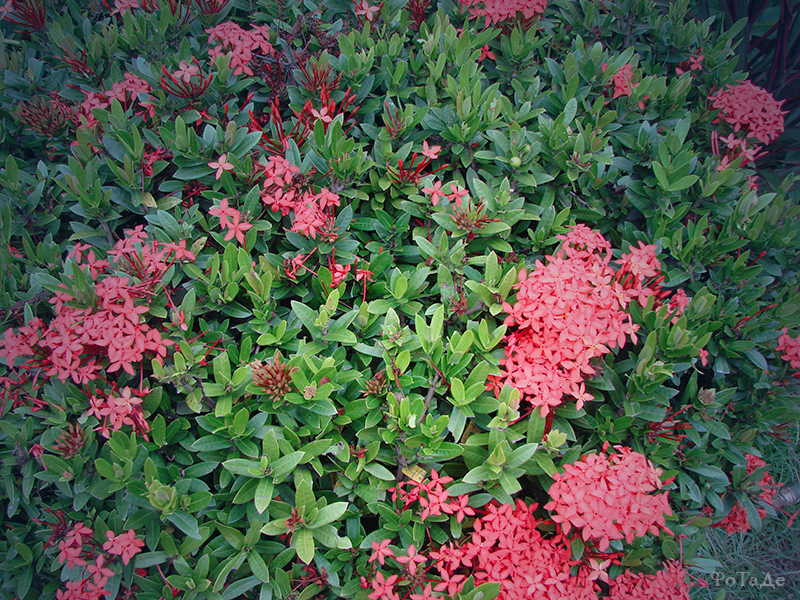
8. Иксора (по-кхмерски Phka Dok Kheum), которую иногда называют «геранью джунглей». Впрочем, камбоджийское название отражает декорирующую функцию этого цветка, ибо женщины им тоже часто украшали волосы (в переводе это что-то вроде «цветок-заколка»). Также эти цветы используются для буддийских подношений, или их можно просто поставить в вазу. Ixora (in Khmer - Phka Dok Kheum), which is sometimes called the "geranium of the jungle". However, the Cambodian name reflects the decorative function of this flower, because women also often decorated their hair with it (it's something like a "flower-hairpin" in translation). These flowers are also used for Buddhist offerings, or these flowers can be placed in a vase. |
|
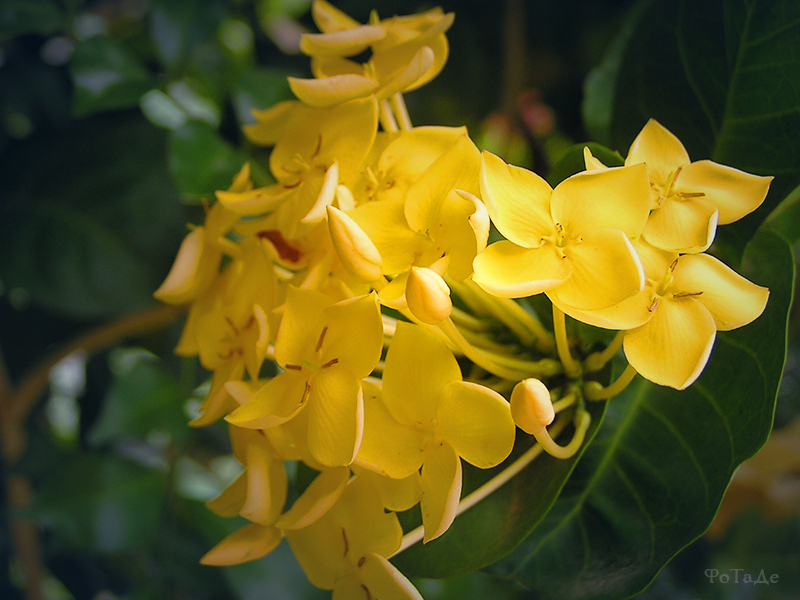
9. Здесь ещё одна разновидность Иксоры, как видно по картинке, жёлтый вид (по-кхмерски её называют Phka Mjul, что переводится как «цветок-иголка»). По структуре соцветия цветы чем-то напоминают гортензию, хотя это совершенно разные виды. There is another variety of Ixora, as seen in the picture, yellow (in Khmer it is called Phka Mjul, which translates as "the needle flower"). According to the structure of the inflorescence, the flowers somewhat resemble a hydrangea, although they are completely different species. |
|
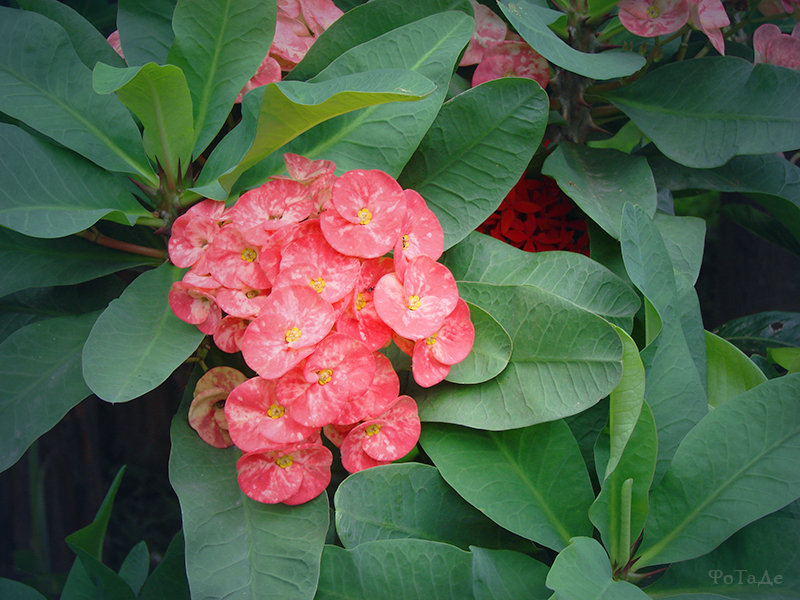
10. Молочай Миля (по-кхмерски - Phka Mjul Pich «алмазный игольчатый цветок», Daem Chhaung Por «брюшная кость», Teveata Brambei Tis «ангел/божество восьми направлений» или Phka Reasei Brambei Teus «восьмиконечная звездчатка»). Популярное декоративное растение в фэн-шуй. Считается, что он помогает привлечь любовь и делает людей более любящими и заботливыми. А шипы этого растения защищают от злых духов и других негативных энергий. Euphorbia milii (in Khmer - Phka Mjul Pich "diamond needle flower", Daem Chhaung Por "abdominal bone", Teveata Brambei Tis "angel/deity of the eight directions" or Phka Reasei Brambei Teus "eight-pointed star"). A popular decorated plant in Feng Shui. It is believed that it helps attract love and makes people more loving and caring. And the thorns of this plant protect against evil spirits and other negative energies. |
|
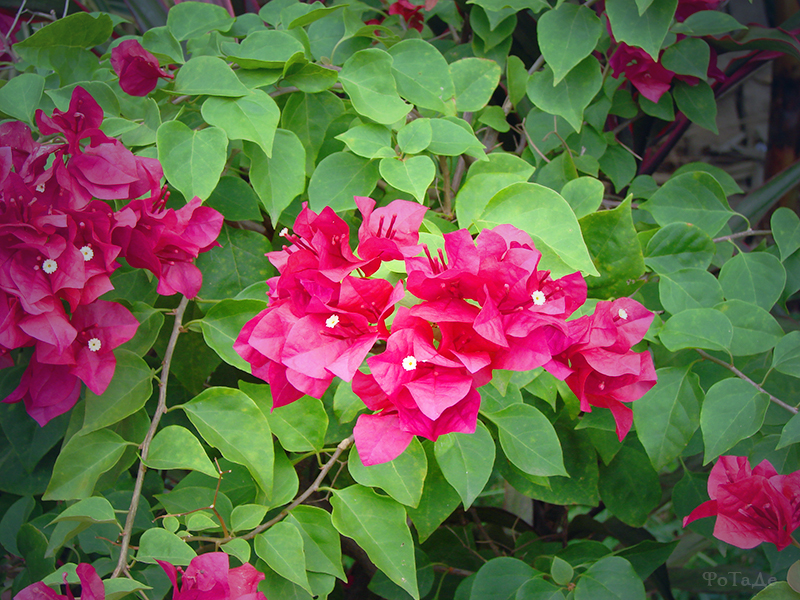
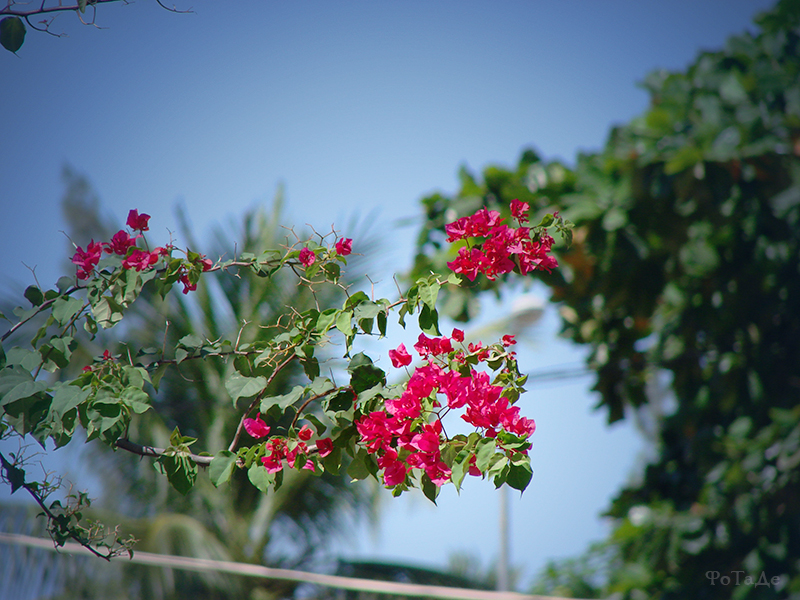
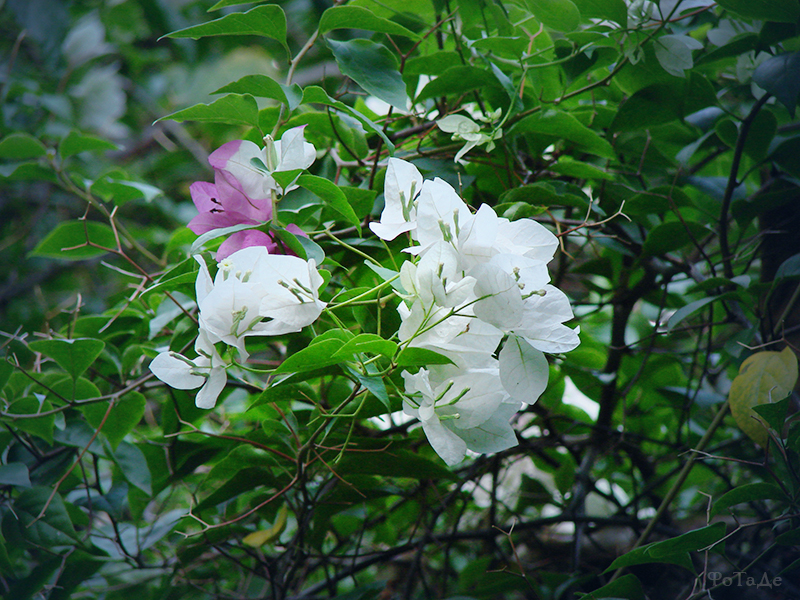
11. Бугенвиллея (по-кхмерски - Phka Kradas «бумажный цветок»). Кто видел это растение, обратил внимание на цветы (на самом деле это не цветы, а цветные прицветники «брактеи»), которые будто сделаны из папиросной бумаги. Отсюда и такое незамысловатое название. Bougainvillea (in Khmer - Phka Kradas "paper flower"). Anyone who has seen this plant has noticed the flowers (in fact, they are not flowers, but colored bracts), which seem to be made of tissue paper. Hence the uncomplicated name. |
|
12. Бугенвиллея. Популярное для Камбоджи растение. Популяция представлена несколькими разновидностями. Bougainvillea. A popular plant in Cambodia. The population is represented by several varieties. |
|
13. Бугенвиллея. Bougainvillea. |
|
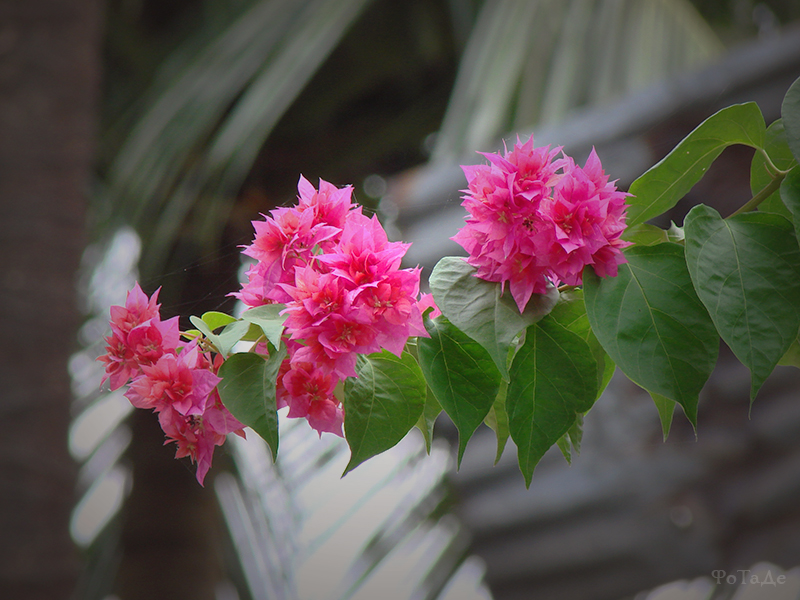
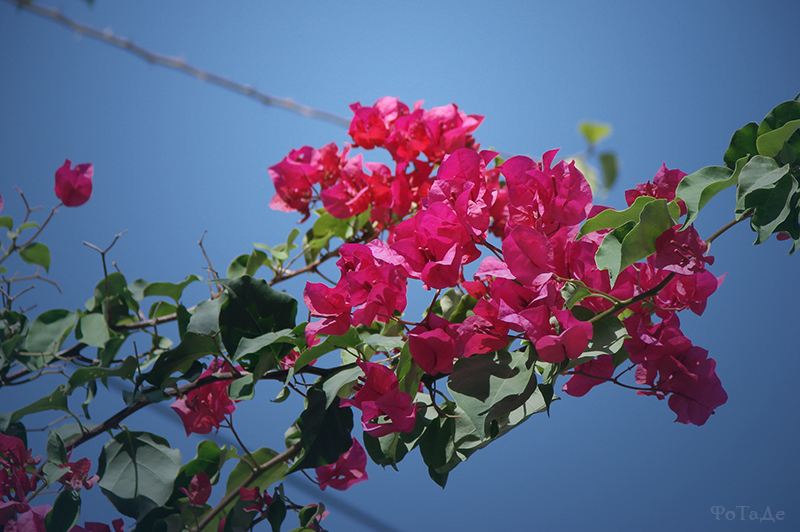
14. Бугенвиллея. Здесь особенно заметна бумажность псевдо-цветов. Bougainvillea. The paperiness of pseudo-flowers is especially noticeable here. |
|
15. Бугенвиллея. И всё-таки её прицветники очень похожи на цветы. Bougainvillea. Nevertheless, its bracts are very similar to flowers. |
|
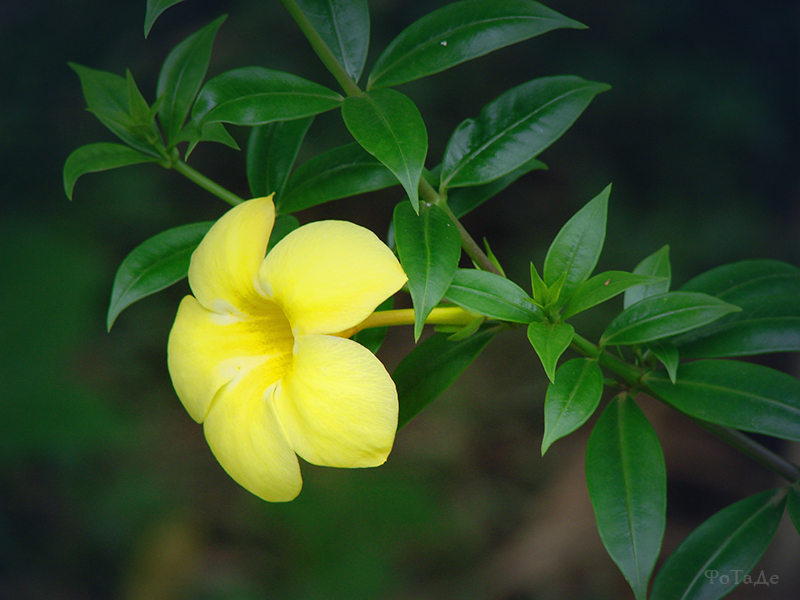
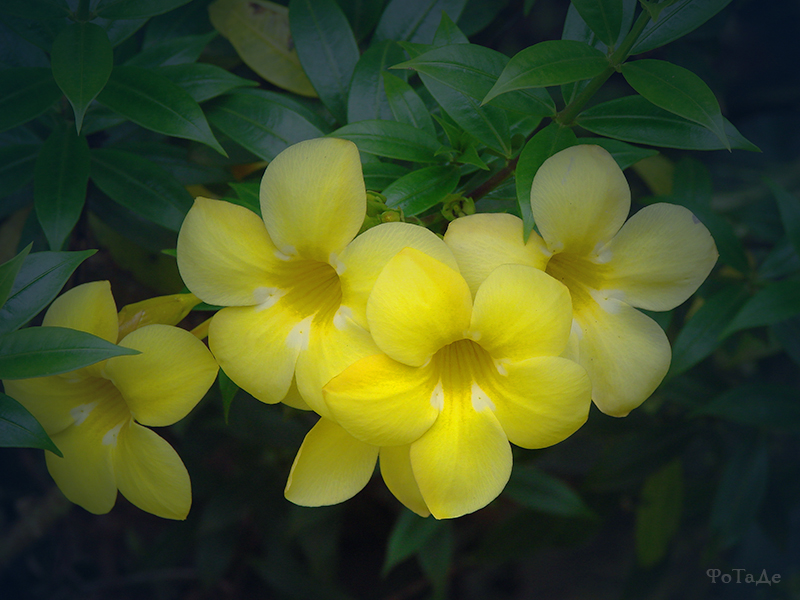
16. Алламанда (по-кхмерски - Phka Trae, что переводится как «цветок-труба», так как напоминает музыкальный инструмент). Allamanda (in Khmer - Phka Trae, which translates as "trumpet flower", as it resembles a musical instrument). |
|
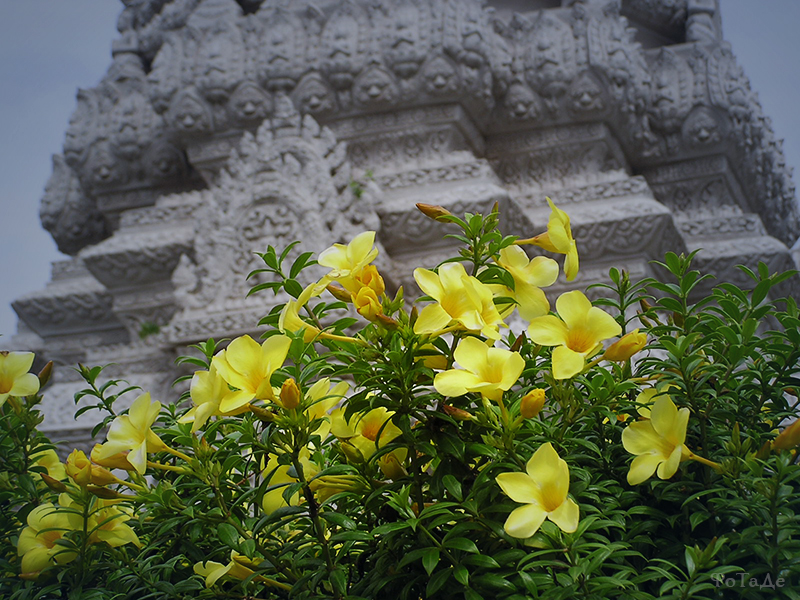
17. Алламанда. У кхмеров есть ещё одно название этого цветка - Phka Chuoroch, которое на русский переводится не очень благозвучно: что-то вроде «цветок, который растёт рядами». Но по этой фотографии понятно, почему название такое. Allamanda. The Khmer people have another name for this flower - Phka Chuoroch, which doesn't translate very well: something like "a flower that grows in rows". But from this photo it is clear why such a name. |
|
18. Здесь мы видим Алламанду, цветущую в Королевском дворце. Here we see Allamandas blooming in the Royal Palace. |
|
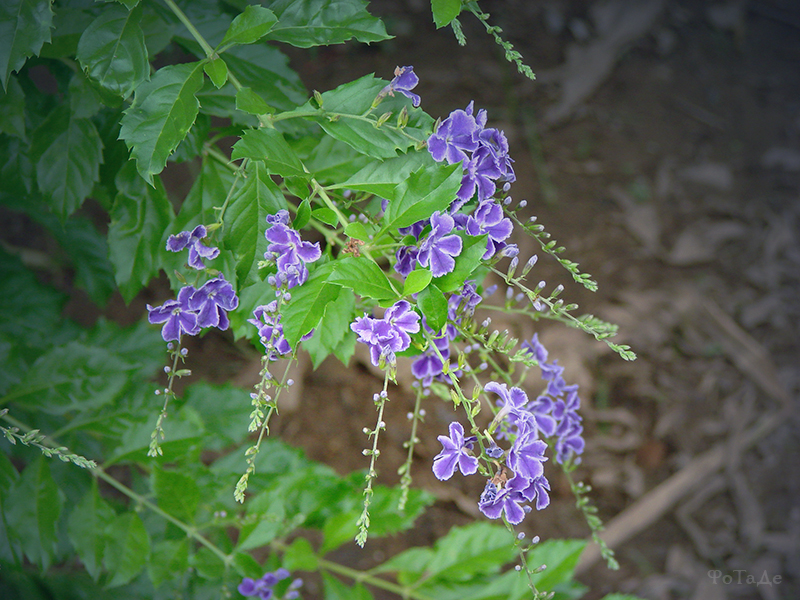
19. Дуранта (по-кхмерски - Phka Kungkea, что означает «цветок Ганга» или «Небесный цветок»). Duranta (in Khmer - Phka Kungkea, which means "Ganges flower" or "Heavenly flower"). |
|
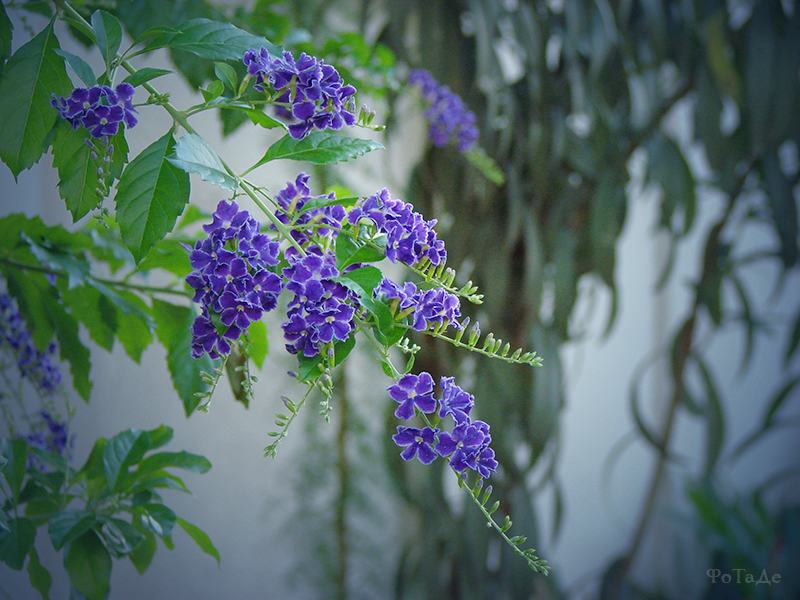
20. Дуранта. Растение колючее, поэтому его часто можно встретить на заборе или даже вместо забора. Чем-то похоже на нашу ежевику по использованию на приусадебном участке, только у ежевики плоды съедобные, а у дуранты ядовитые. Duranta. The plant is prickly, so it can often be found on a fence or even instead of a fence. It is somewhat similar to blackberries for use in the backyard, only blackberries have edible fruits, while durants are poisonous. |
|
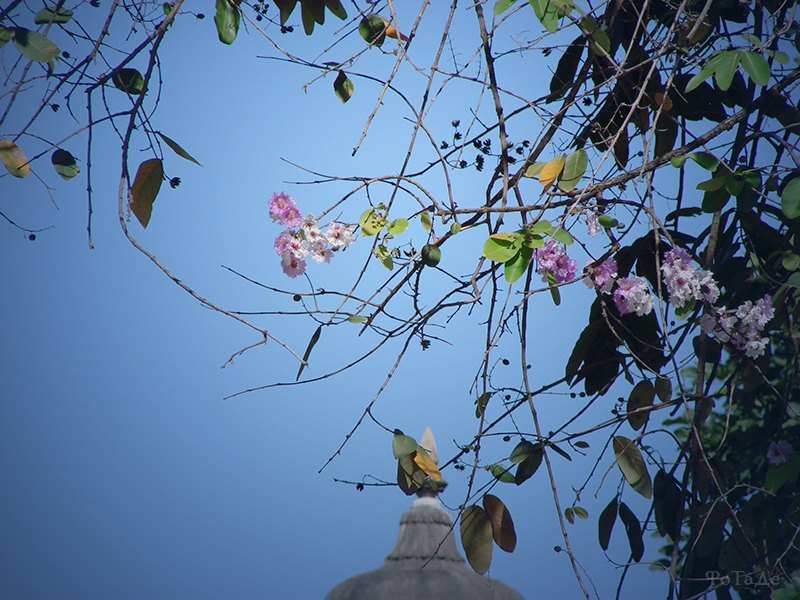
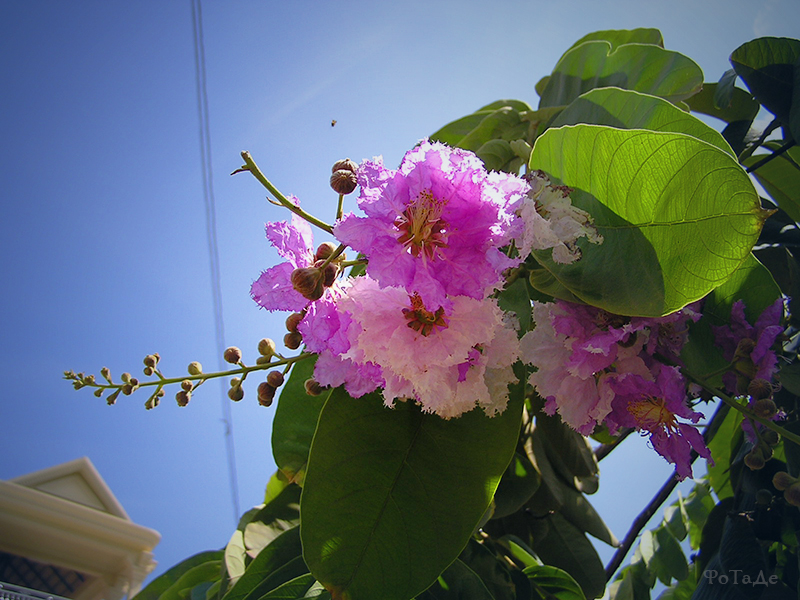
21. Лагерстрёмия. Кхмерских названий у этого растения много (например, Sralao/Srolao, Trapek, Indanel, Anntenél и др.). Здесь представлен не самый красивый вариант растения, но вообще лагерстрёмии порой очень пышно цветут, за что их называют цветом Индры или индийской сиренью. Lagerstroemia. There are many Khmer names for this plant (for example, Sralao/Srolao, Trapek, Indanel, Anntenél, etc.). Not the most beautiful version of the plant is presented here, but in general Lagerstremia sometimes bloom very luxuriantly, for which they are called the color of Indra or Indian lilac. |
|
22. Лагерстрёмия. В Камбодже это растение символизирует небесную защиту, женскую красоту, непостоянство жизни, гостеприимство и гармонию. Её часто сажают у храмов и домов как растение, оказывающее благотворное влияние. Lagerstroemia. In Cambodia, this plant symbolizes heavenly protection, feminine beauty, impermanence of life, hospitality and harmony. It is often planted near temples and houses as a plant that has a beneficial effect. |
|
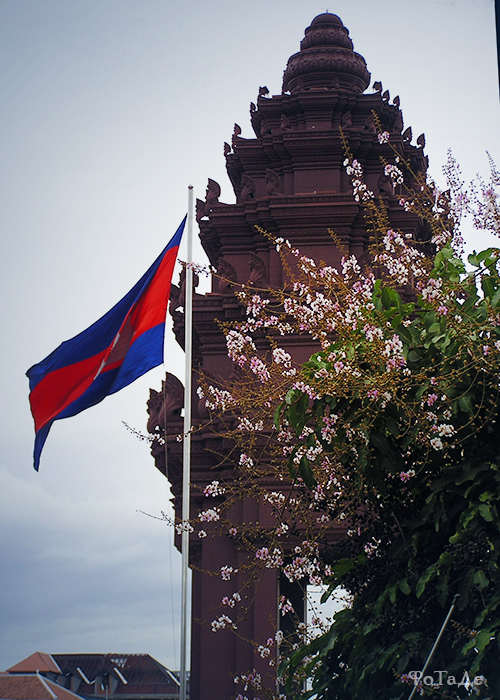
23. Лагерстрёмия на фоне Монумента Независимости. Lagerstroemia on the background of the Independence Monument. |
|
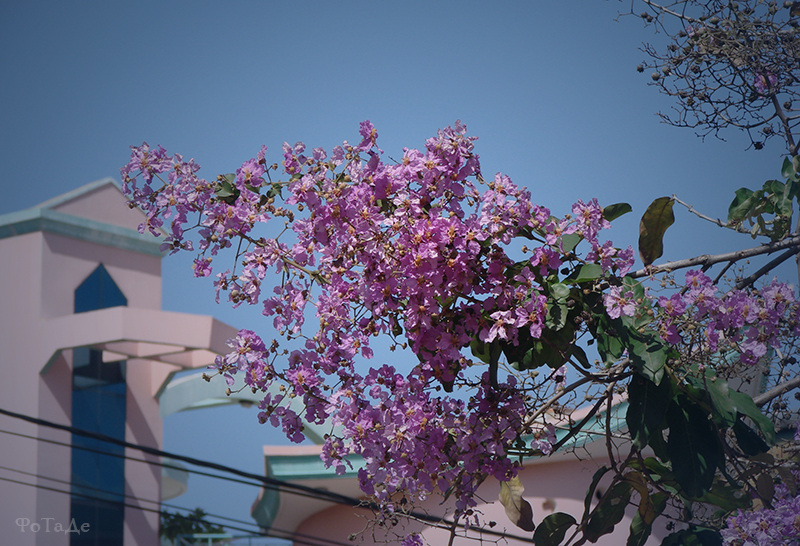
24. Лагерстрёмия. Когда цветов слишком много, её ветки похожи на розовые облачка. Lagerstroemia. When there are too many flowers, its branches look like little pink clouds. |
|
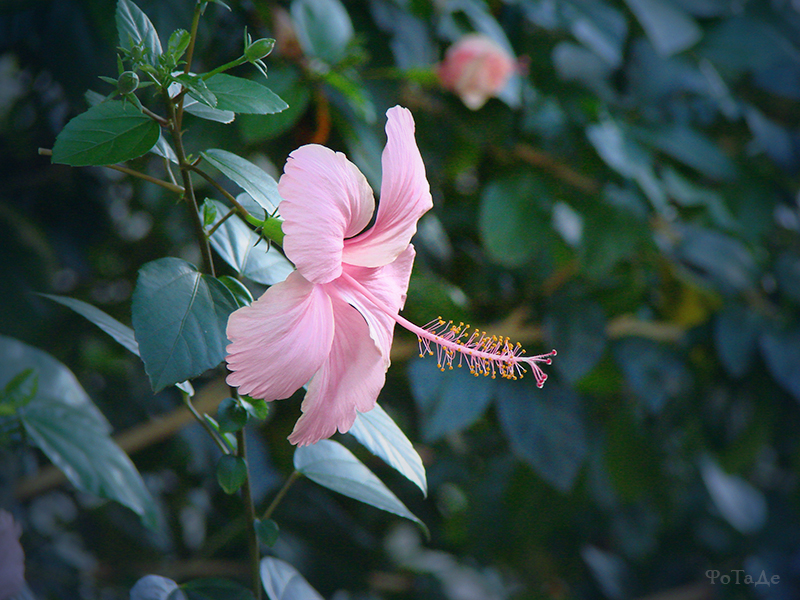
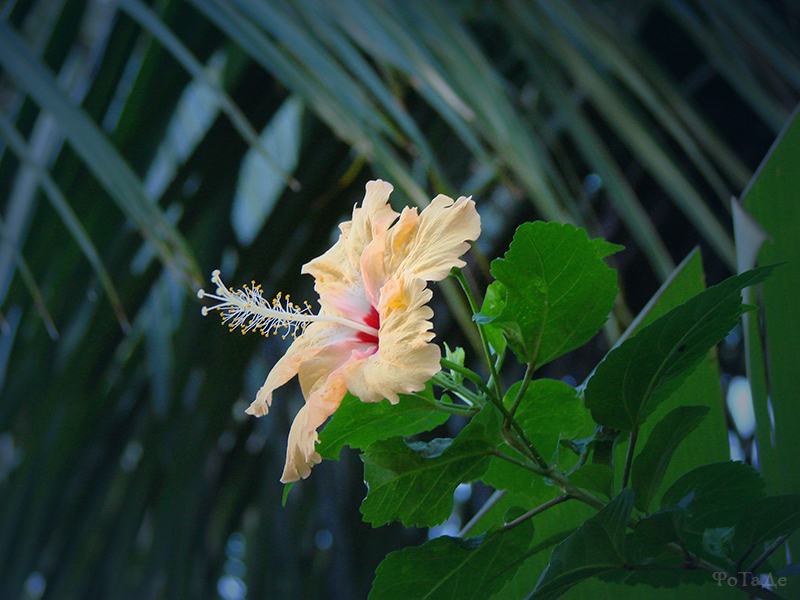
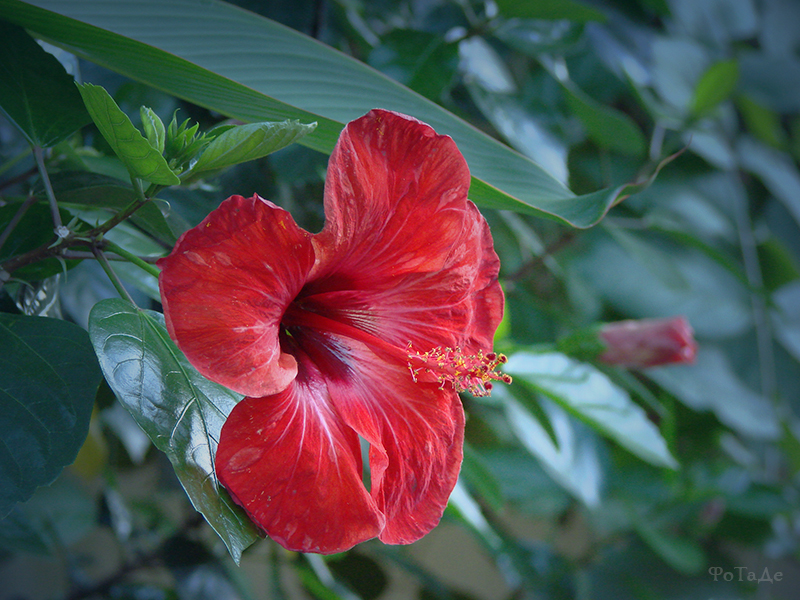
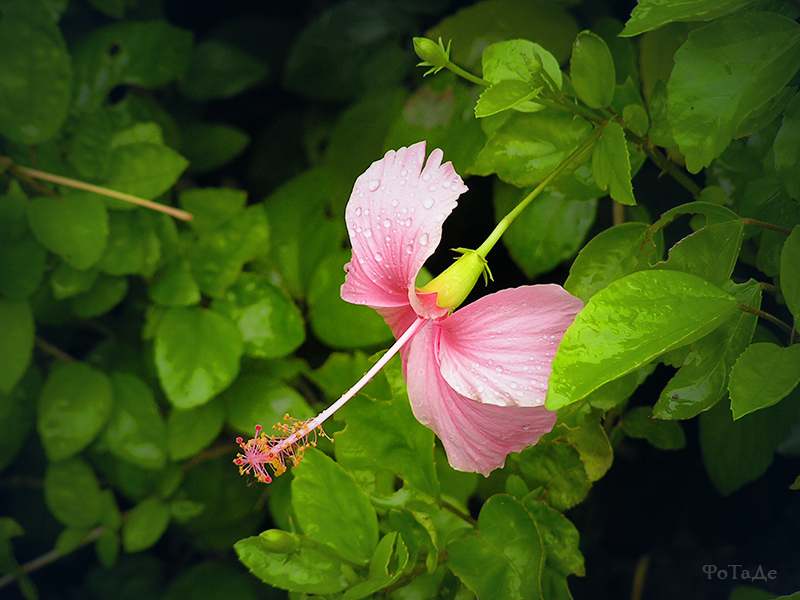
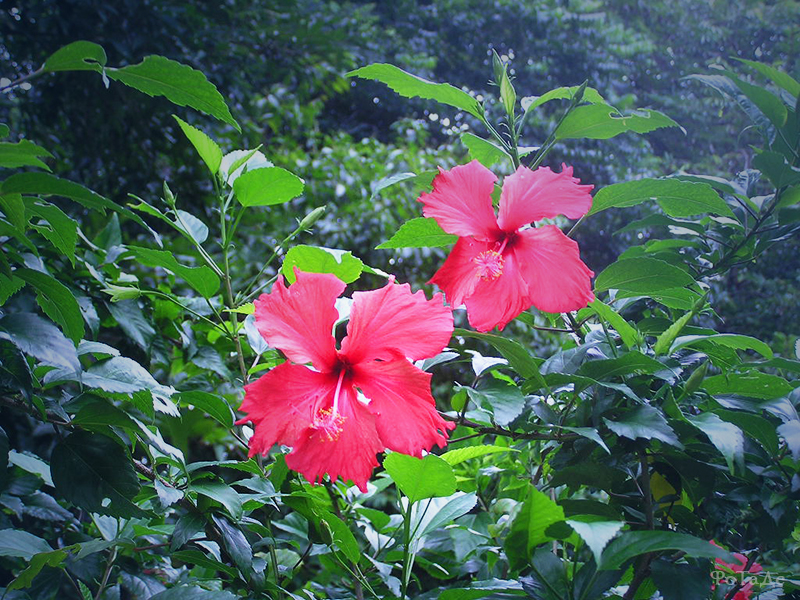
25. Гибискус (по-кхмерски - Phka Rumyol, что переводится как «качающийся цветок», или Daem Chbar - «древесная изгородь»). Hibiscus (in Khmer - Phka Rumyol, which translates as "swinging flower", or Daem Chbar - "tree fence"). |
|
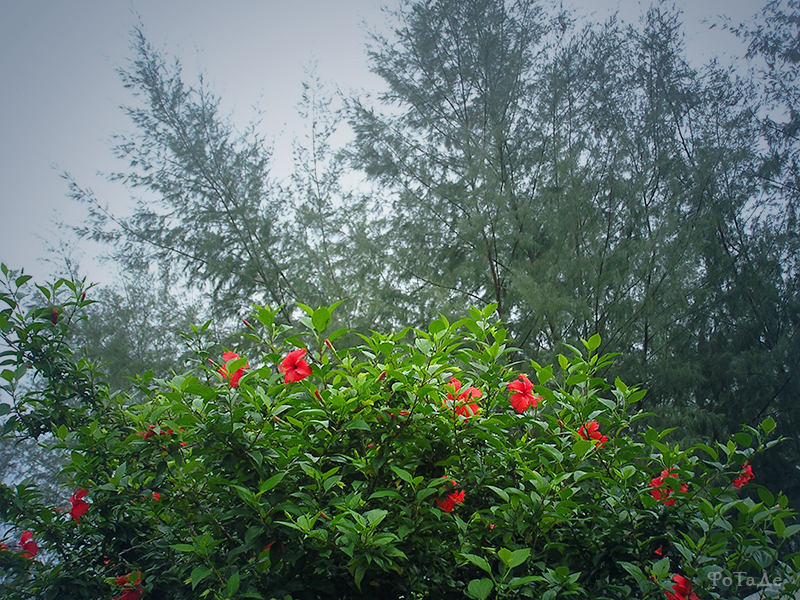
26. Гибискус в Камбодже очень популярен, поэтому эти цветы здесь можно встретить буквально на каждом углу. Hibiscus is very popular in Cambodia, so these flowers can be found here literally on every corner. |
|
27. Гибискус. Пожалуй, самый популярный цвет для этого цветка - красный. Hibiscus. Perhaps the most popular color for this flower is red. |
|
28. Гибискус. Ещё его его называют «китайской розой». Возможно, потому что его венчик тоже состоит из пяти лепестков. Hibiscus. It is also called the "Chinese rose". Perhaps, because its corolla also consists of five petals. |
|
29. Гибискус. Его цветы на кусте похожи на больших бабочек. Hibiscus. It flowers on the bush look like big butterflies. |
|
30. Гибискус. Hibiscus. |
|
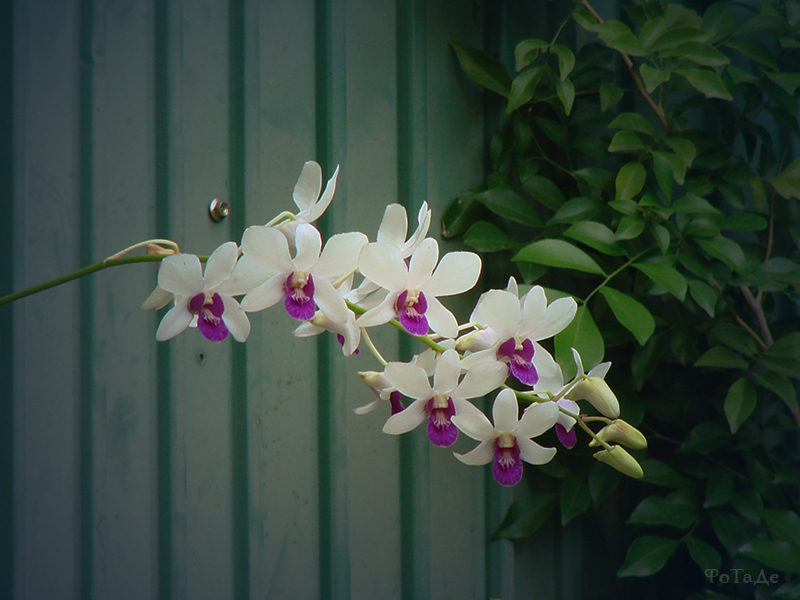
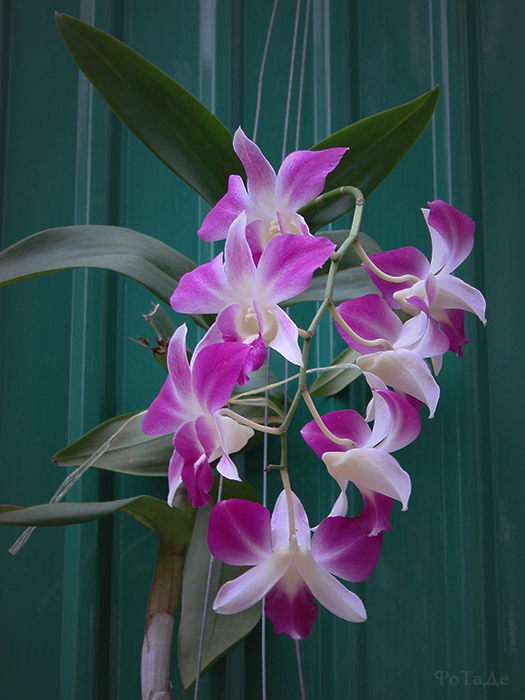
31. Орхидеи по-кхмерски - Phka Orkide (цветок орхидеи, транслитерация с французского) или Phka Prey («лесной цветок»). Здесь мы видим орхидею, которая представляет собой гибрид Дендробиума и Фаленопсиса (которая так и называется - Дендробиум фаленопсис). Это окультуренный вариант, растущий в одном из камбоджийских дворов в подвешенном на заборе горшочке. Orchids in Khmer are Phka Orkide (orchid flower, transliterated from French) or Phka Prey ("forest flower"). Here we see an orchid, which is a hybrid of Dendrobium and Phalaenopsis (which is called Dendrobium phalaenopsis). This is a cultivated version, growing in one of the Cambodian courtyards in a pot suspended on a fence. |
|
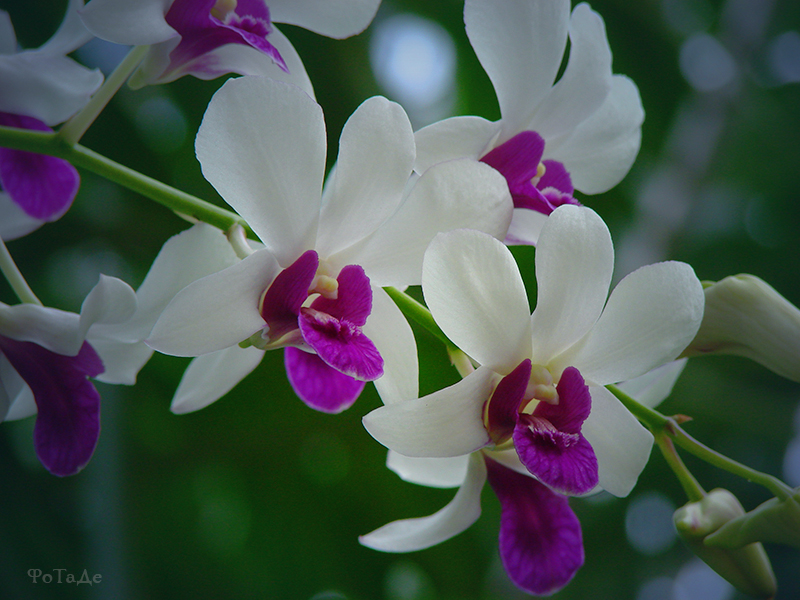
32. Цветы этого дендробиума ну очень похожи на фаленопсис, из-за чего их часто путают. The flowers of this dendrobium are very similar to phalaenopsis, which is why they are often confused. |
|
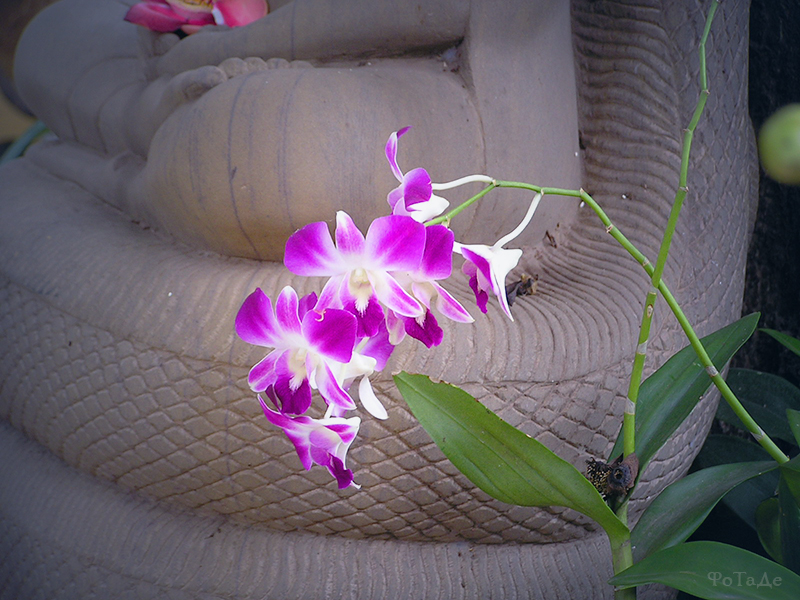
33. Дендробиум. Здесь мы видим эту орхидею на фоне статуи Будды. Dendrobium. Here we see this orchid on the background of the Buddha statue. |
|
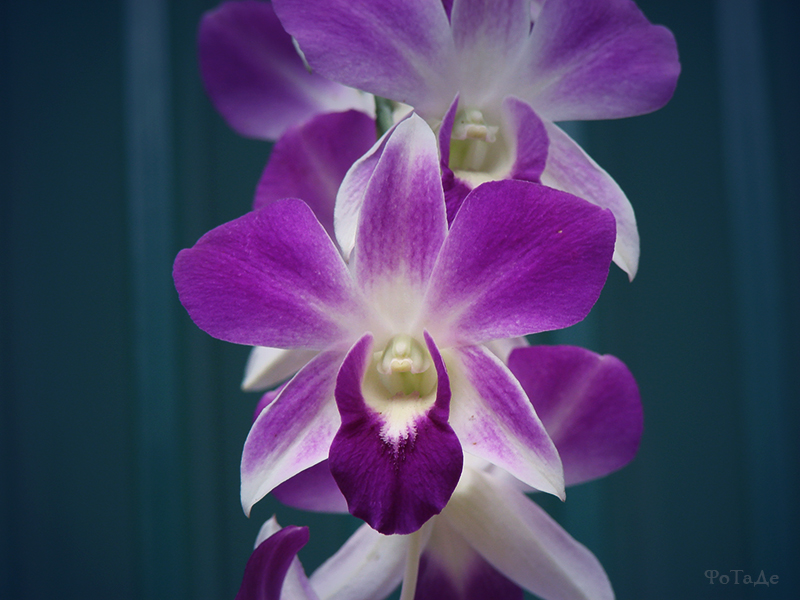
34. Дендробиум. На самом деле этот вид наиболее коммерциализирован, именно эта орхидея получила широкое распространение и в виде букетов, и в корпоративном декоре (например, у тайских авиалиний). Dendrobium. In fact, this species is the most commercialized, it is this orchid that has become widespread both in the form of bouquets and in corporate decor (for example, Thai airlines). |
|
35. Дендробиум. Dendrobium. |
|
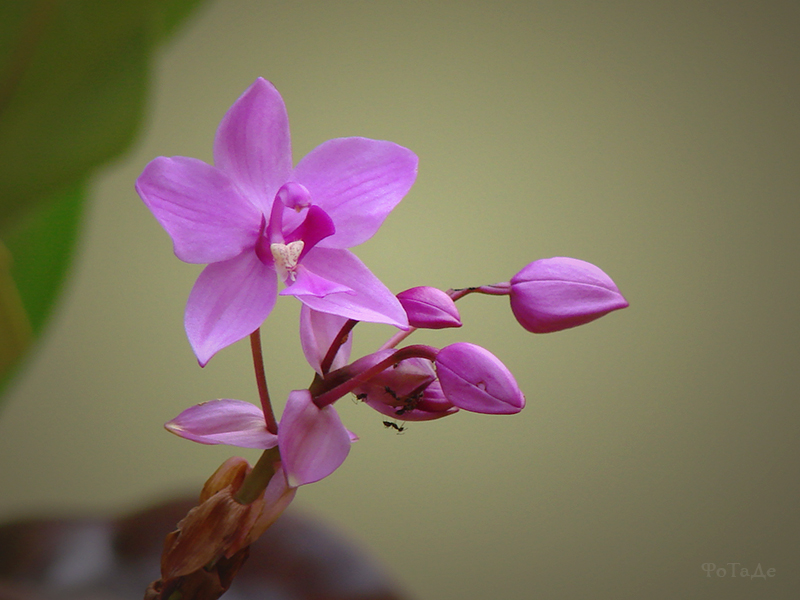
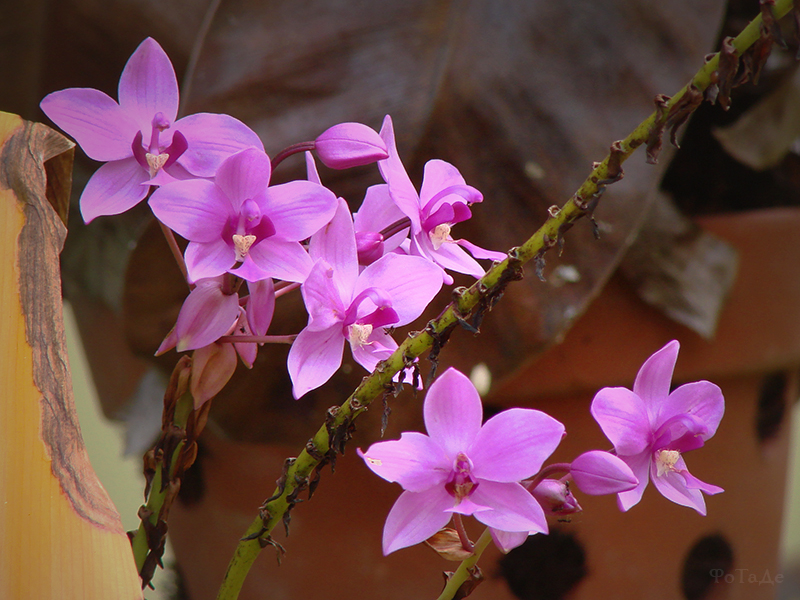
36. Орхидея Спатоглоттис складчатый (по-кхмерски - Phka Dei, что переводится как «цветок земли», и это название происходит от английского ground orchid «земляная орхидея»). Orchid Spathoglottis folded (in Khmer - Phka Dei, which translates as "flower of the ground", and this name comes from the English "ground orchid"). |
|
37. Спатоглоттис примечателен тем, что он может расти прямо на земле, а не на деревьях, и пока не зацветет, его легко перепутать с травой из-за особенностей строения листьев. Spathoglottis is notable for the fact that it can grow directly on the ground, rather than on trees, and until it blooms, it is easy to confuse it with grass due to the structure of the leaves. |
|
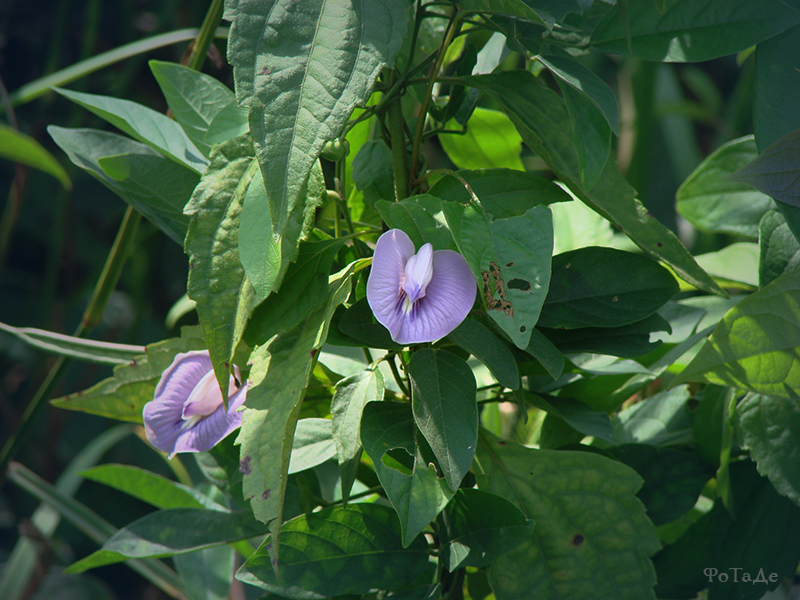
38. Центросема виргинская (по-кхмерски - Kantouy Yuon, переводится что-то вроде «вьетнамская свёртывающаяся трава», или Pobay Khmoch, «призрачная трава»). Это растение из семейства бобовых, чей цветок имеет необычное строение: обычно самый большой лепесток («парус») у этого семейства сверху, а у этого растения - снизу, из-за чего его называют «бабочкиным горошком». Centrosema virginiana (in Khmer - Kantouy Yuon, translates to something like "Vietnamese curdling grass", or Pobay Khmoch - "ghost grass"). It is a plant from the legume family, whose flower has an unusual structure: usually the largest petal ("sail") it is located on top in this family, but in this plant - on the bottom, which is why it is called the "butterfly pea". |
|
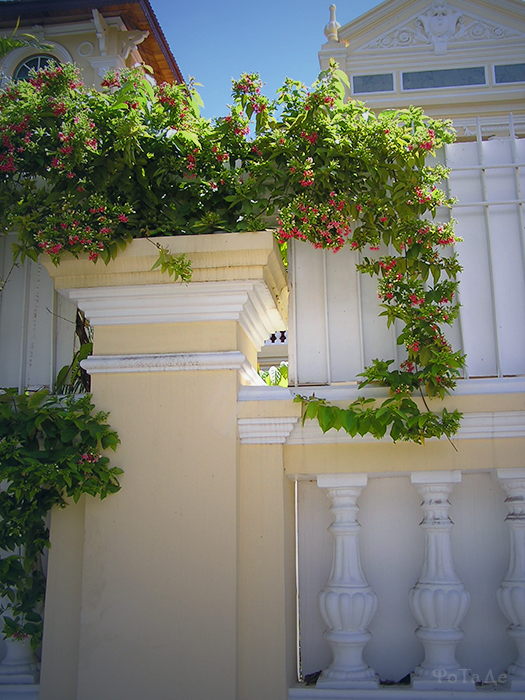
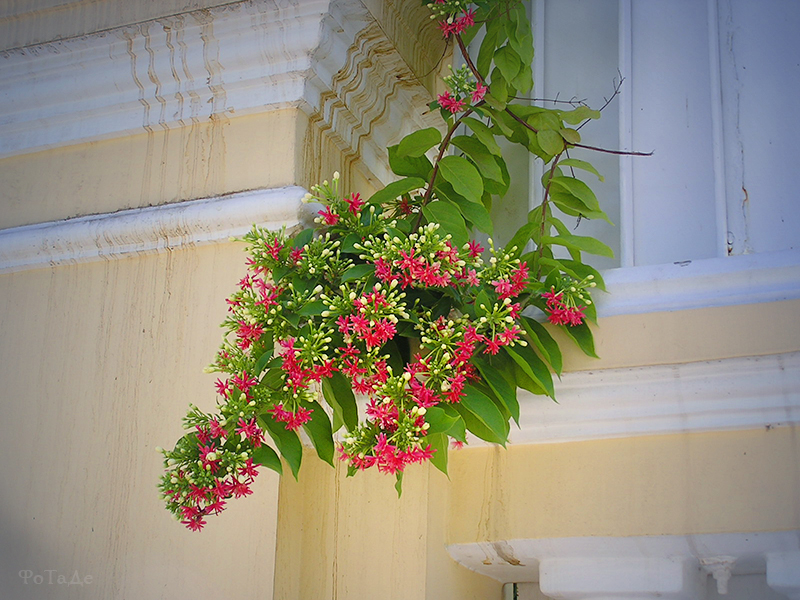
39. Квисквалис или Комбретум индийский (по-кхмерски - Phka Dok Neang, что переводится как «цветок-заколка для госпожи»). Quisqualis or Combretum indicum (in Khmer - Phka Dok Neang, which translated as "flower hairpin for mistress"). |
|
40. Квисквалис в Камбодже часто растет по заборам. Это красивая цветущая лиана, которая отлично смотрится в традиционных архитектурных ансамблях. Quisqualis in Cambodia often grows on fences. It is a beautiful flowering liana that looks great in traditional architectural ensembles. |
|
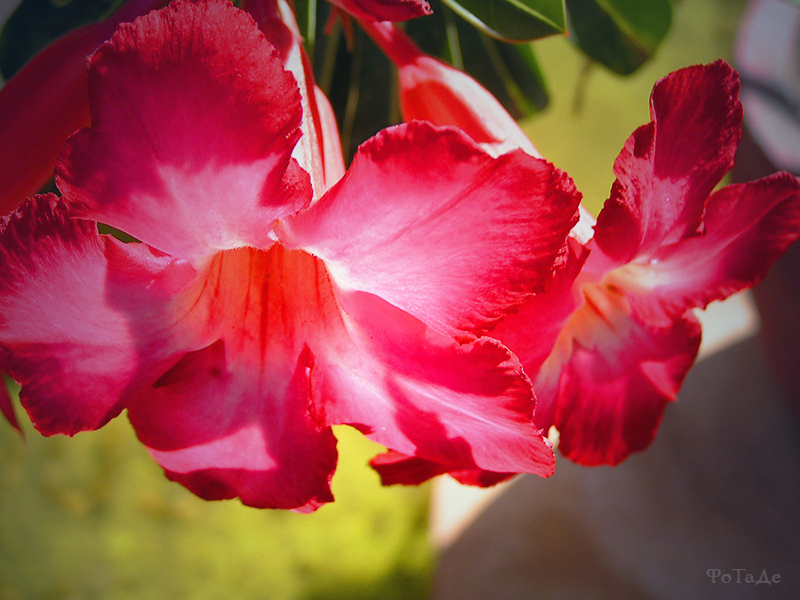
41. Адениум (по-кхмерски - Champei Siem, что переводится как «сиамская плюмерия»). Также это растение называют «розой пустыни». Adenium (in Khmer - Champei Siem, which translates as "Siamese plumeria"). This plant is also called the "rose of the desert". |
|
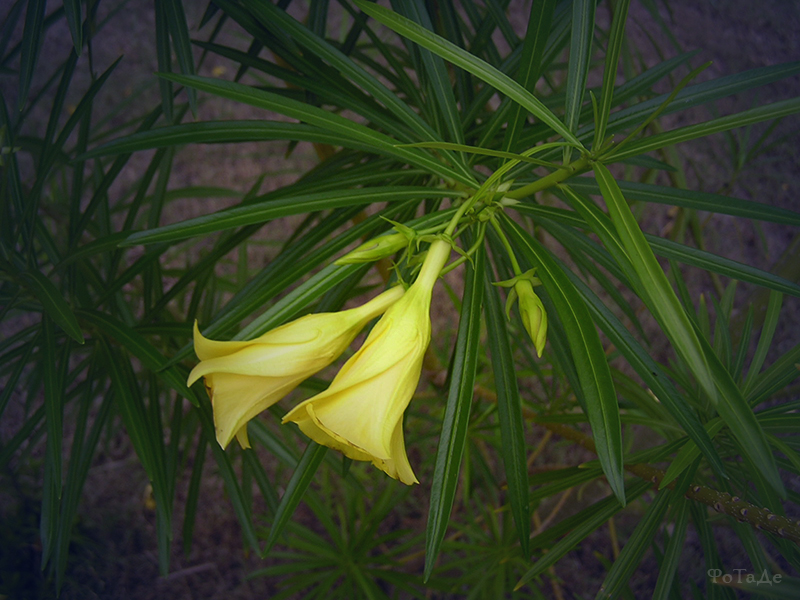
42. Теветия, она же «желтый олеандр» или «счастливый орех» (по-кхмерски - Krapur, что переводится как «ядовитый»). Это действительно чрезвычайно ядовитое растение, у которого ядовито всё, но больше всего - плоды. Thevetia, also known as "yellow oleander" or "lucky nut" (in Khmer - Krapur, which translates as "poisonous"). In fact, it is an extremely poisonous plant, in which everything is poisonous, but most of all, the fruits. |
|
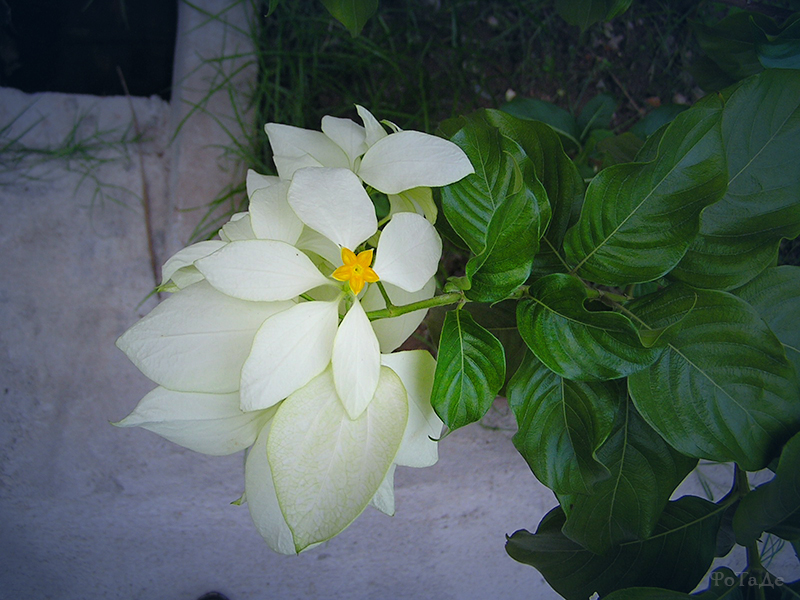
43. Муссенда - тропическое растение, у которого маленький цветок (желтенький на фото) окружен красивыми большими прицветниками-брактеями. Mussaenda is a tropical plant with a small flower (yellow in the photo) surrounded by beautiful large bracts. |
|
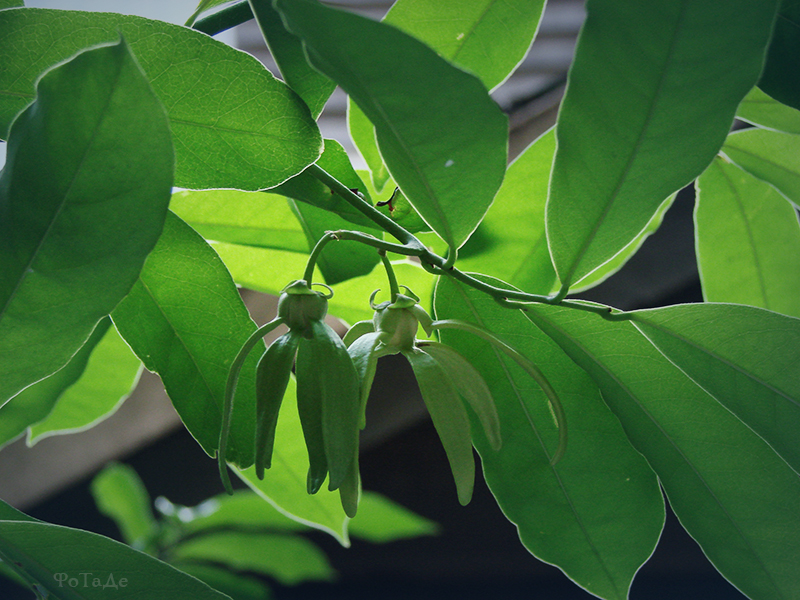
44. Иланг-иланг (по-кхмерски - Kdang Ngoa, что так и переводится: «иланг-иланг»). Вот эти две «висюльки» на фото - это и есть цветы данного дерева. Ylang-Ylang (in Khmer - Kdang Ngoa, which translated as "ylang-ylang"). These two "hangers" in the photo are the flowers of this tree. |
|
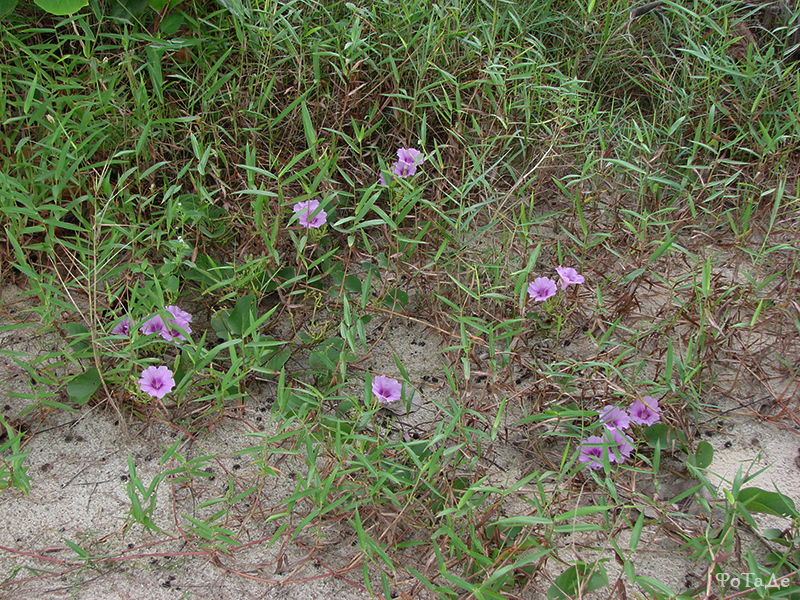
45. Ипомея двулопостная, более известная в Камбодже как «пляжный вьюнок» (по-кхмерски - Trakoun, что переводится как «вьюнок» или «ипомея»). Ipomoea pes-caprae, better known in Cambodia as "beach bindweed" (in Khmer - Trakoun, which translates as "bindweed" or "ipomoea"). |
|
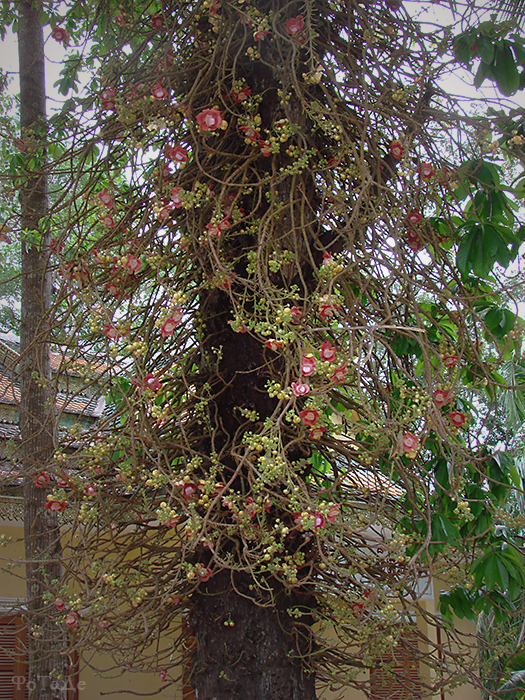
46. Курупита гвианская (по-кхмерски - Reang Phnom «горная лиана» или Sal Preuks «храмовое дерево», потому что его часто сажают на территории храмов и цветы используют для подношений, а также иногда его называют Reang Prosot - это название отражает, что именно под ним родился Будда). Это огромные деревья с очень высокой кроной, чьи полуголые ветви усыпаны крупными восковыми цветами. Couroupita guianensis (in Khmer - Reang Phnom means "mountain liana" or Sal Preuks "temple tree", because it is often planted on temple grounds, and its flowers are used for offerings, and it is also sometimes called Reang Prosot - this name reflects that it was under it that the Buddha was born). These are huge trees with a very high crown, whose half-naked branches are covered with large wax flowers. |
|
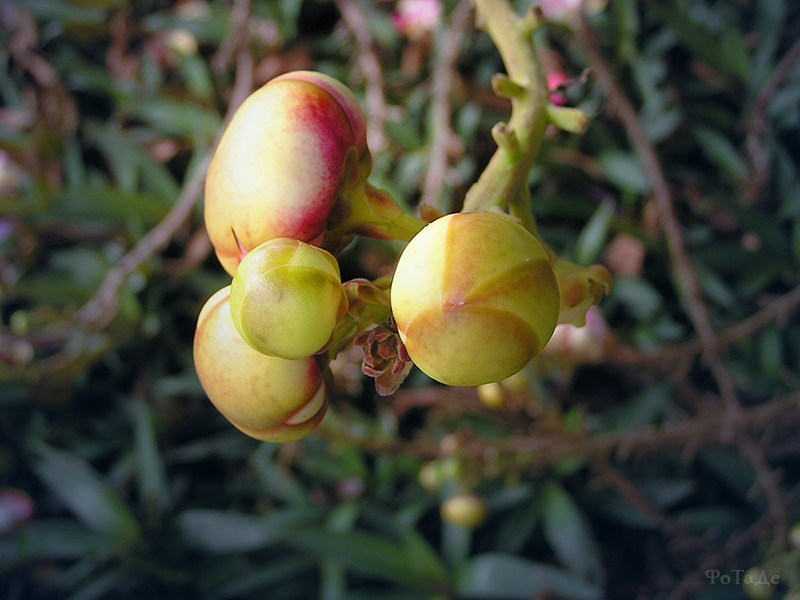
47. Бутоны Курупиты гвианской. Buds of Couroupita guianensis. |
|
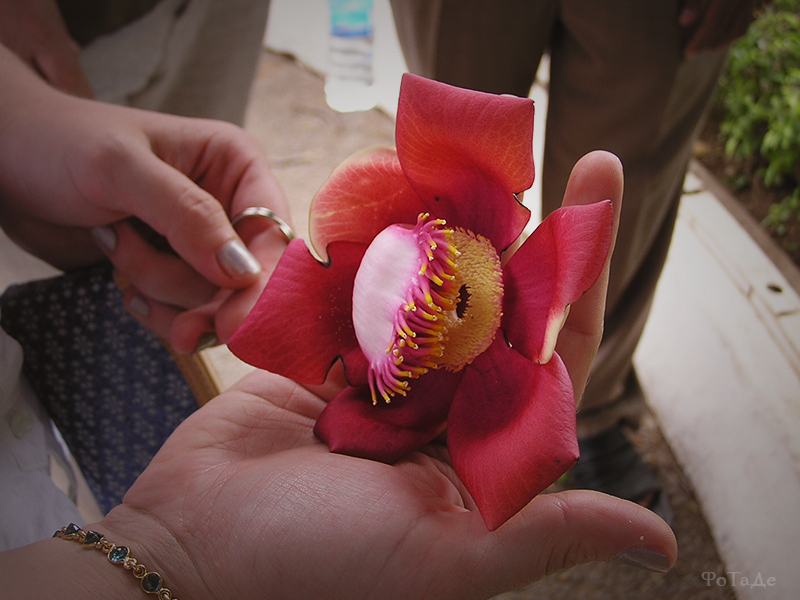
48. Здесь можно рассмотреть цветок Курупиты гвианской, заодно поняв его размер по сравнению с ладонью человека. Here you have a real good look at the flower of the Couroupita guianensis, at the same time understanding its size compared to the palm of a human hand. |
|
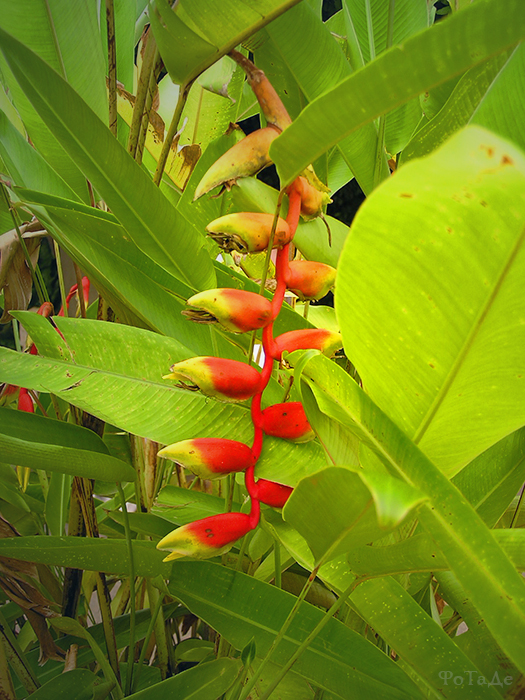
49. Геликония (по-кхмерски - Phka Rum Chek «цветок, обвивающий банан» или Daem Chek Meas - «золотой банан»). Часто растет в бананах (что, кстати, можно заметить и по представленному фото), поэтому такие названия. Heliconia (in Khmer - Phka Rum Chek, meaning a flower wrapping around a banana, or Daem Chek Meas - "golden banana"). It often grows in bananas (which, by the way, can be seen in the photo), therefore such names). |
|
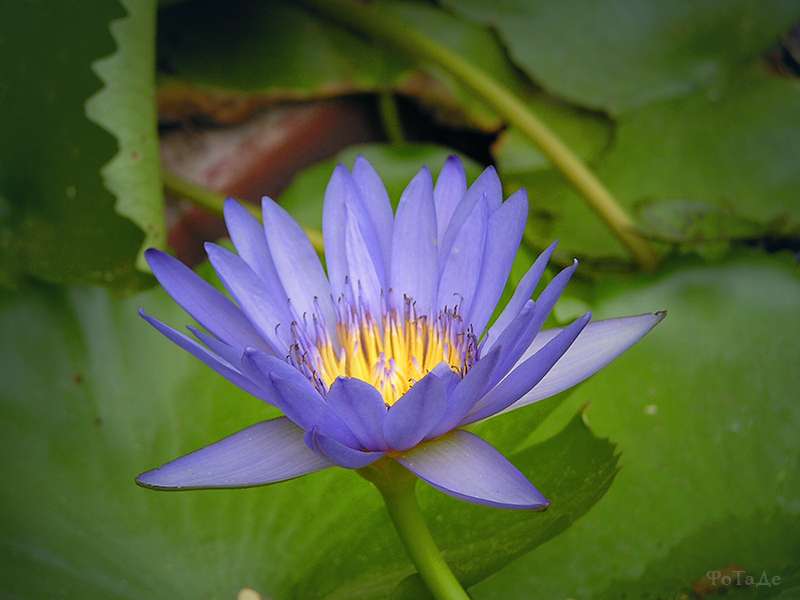
50. Голубой лотос или голубая водяная лилия (последнее по-кхмерски будет Lumchong pon khiev, где Lumchong - общее название всех голубых лилий в Камбодже). Blue lotus or blue water lily (the latter in Khmer would be Lumchong pon khiev, where Lumchong is the common name of all blue lilies in Cambodia). |
|
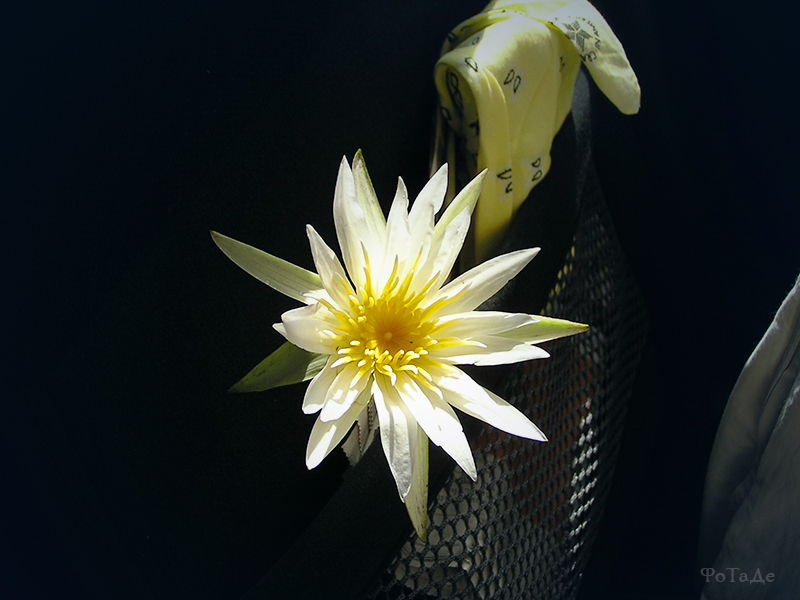
51. Водяная лилия или Кувшинка (по-кхмерски - Phka Pralit, что так и переводится: кувшинка). Water lily (in Khmer - Phka Pralit, which translates as "water lily"). |
|
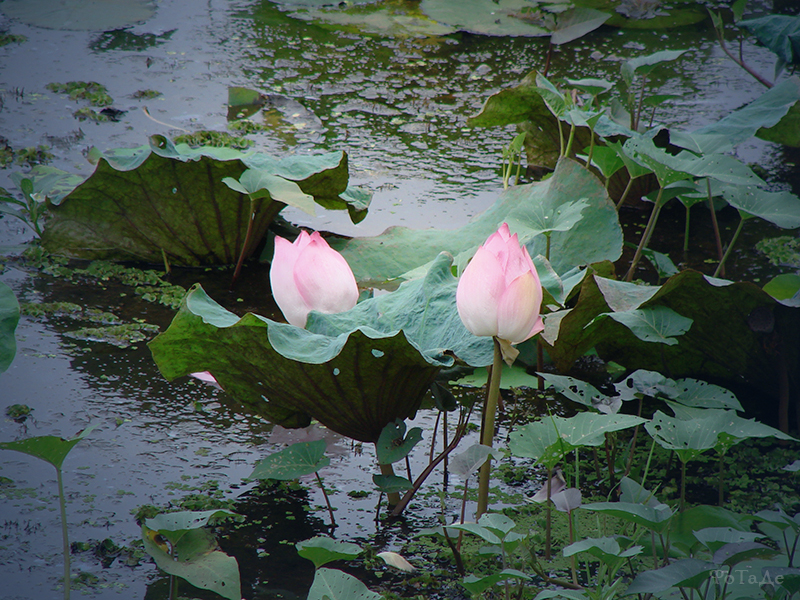
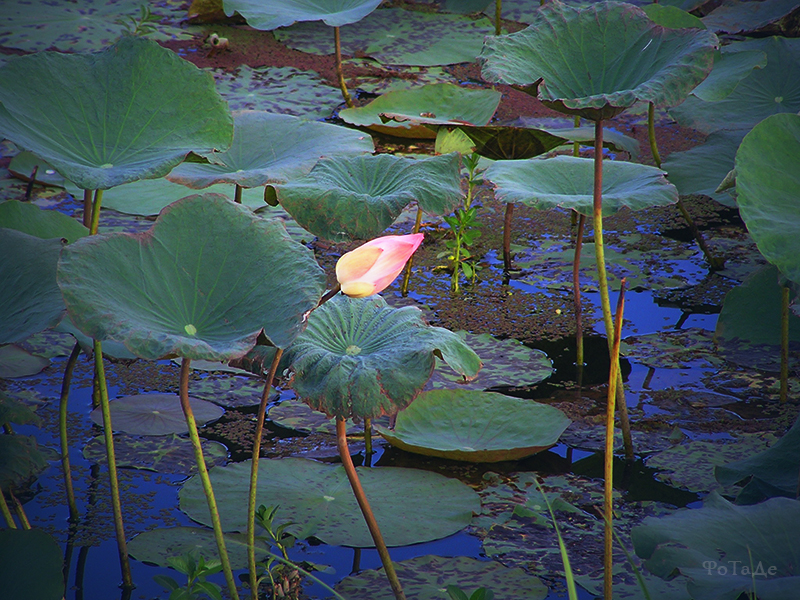
52. Бутоны лотоса (по-кхмерски - Chhouk, что переводится «лотос»). Lotus Buds (lotus in Khmer - Chhouk, which means "lotus"). |
|
53. Лотос - главное украшение кхмерских болот. The lotus is the main decoration of the Khmer marshes. |
|
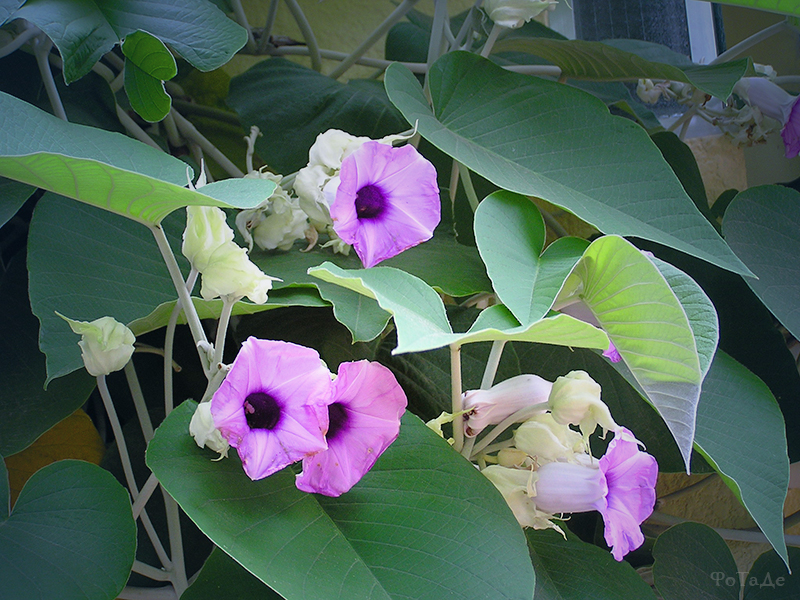
54. Аргирея жилковая или Гавайская роза (по-кхмерски - Vlai Damrey, что переводится как «слоновий вьюнок» или «слоновья лиана» - видимо, из-за массивности и листьев, и цветов). Argyrea nervosa or Hawaiian rose (in Khmer - Vlai Damrey, which translates as "elephant bindweed" or "elephant creeper" - apparently because of the massiveness of both leaves and flowers). |
|
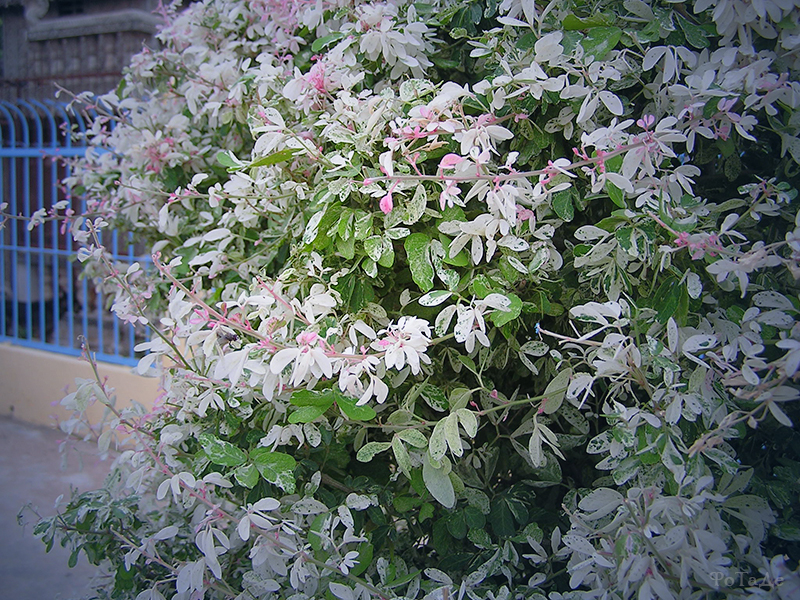
55. Брейния снежная. Кхмерского названия за данным растением не закрепилось, используются англоязычные и адаптированные французские термины, соответствующие названию «снежный куст». Breynia Nivosa. There is no Khmer name for this plant, English-language and adapted French terms corresponding to the name "snow bush" are used. |
|
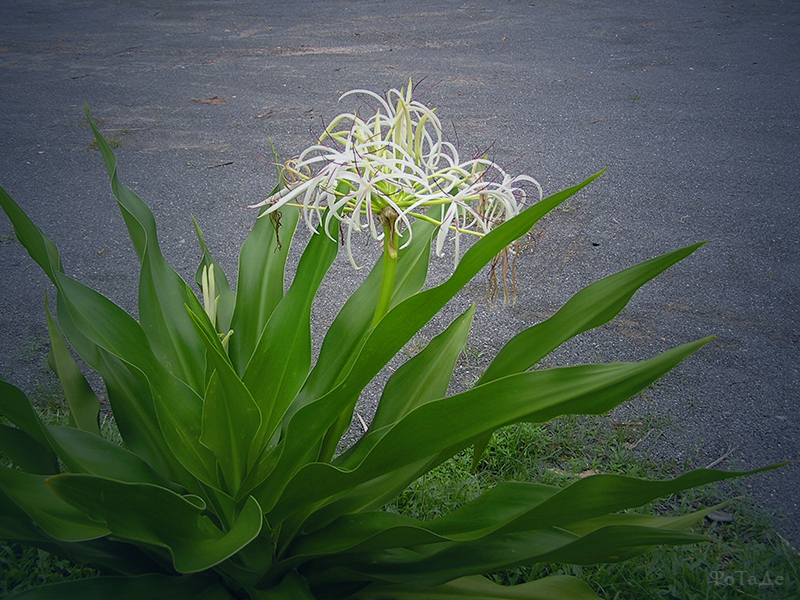
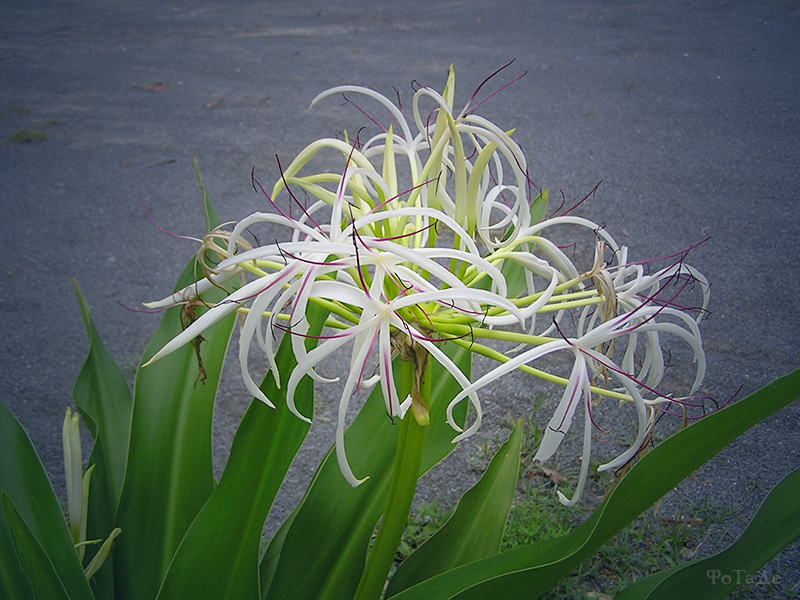
56. Кринум из семейства амариллисовые (по-кхмерски - Kamphleung, что значит «сияющий» или «блистательный»). Crinum from the Amaryllidaceae family (in Khmer - Kamphleung, which means "shining" or "resplendent"). |
|
57. Кринум имеет очень тонкие лепестки, из-за чего кажется, что его цветы перепутались между собой. The crinum has very thin petals, which makes it seem that its flowers are mixed up with each other. |
|
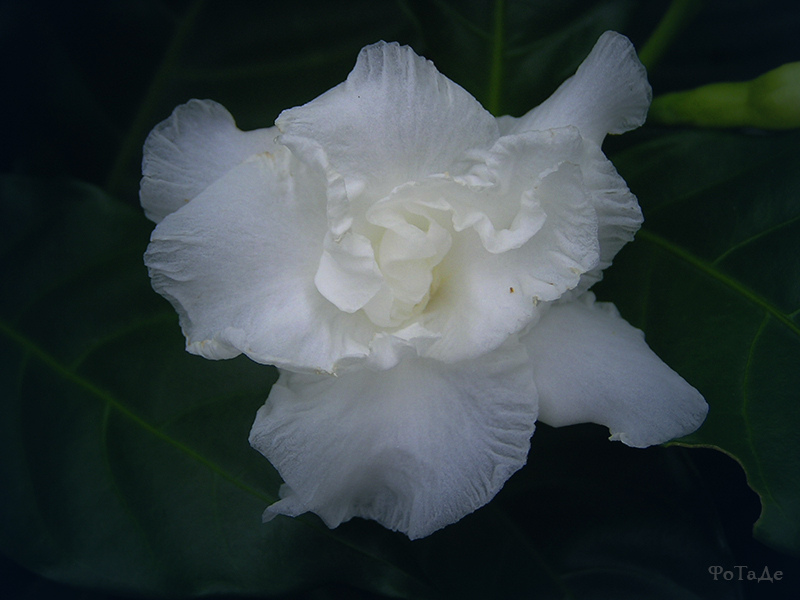
58. Табернемонтана (по-кхмерски - Phka Nuon Srei или «цветок нежной девушки»). Tabernaemontana (in Khmer - Phka Nuon Srei or "the flower of a gentle girl"). |
|
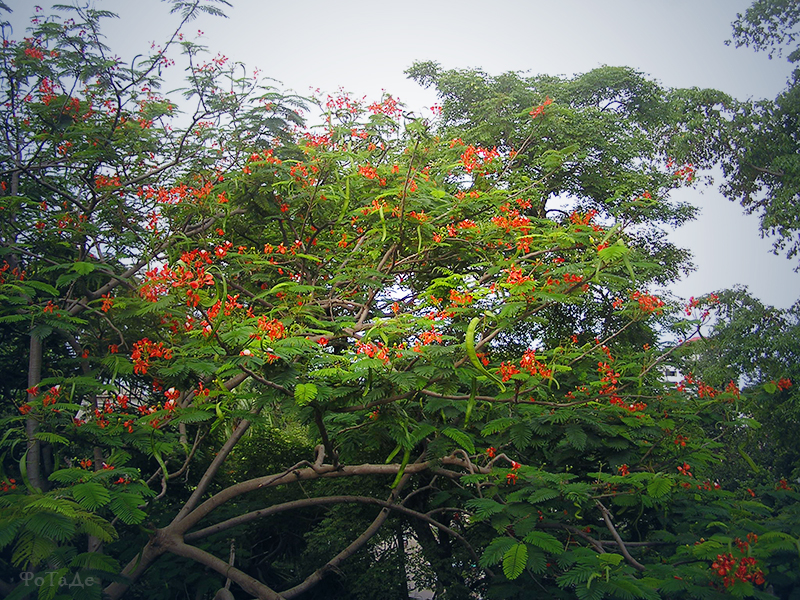
59. Делоникс королевский (по-кхмерски - Daem Kngok/Kngaok «павлинное дерево», Kngok Barang «французский павлин» или Phka Chhorm Chha, что означает «красивый огненный цветок»). Delonix regia (in Khmer - Daem Kngok/Kngaok "peacock tree", Kngok Barang "French peacock" or Phka Chhorm Chha, which means "beautiful fiery flower"). |
|
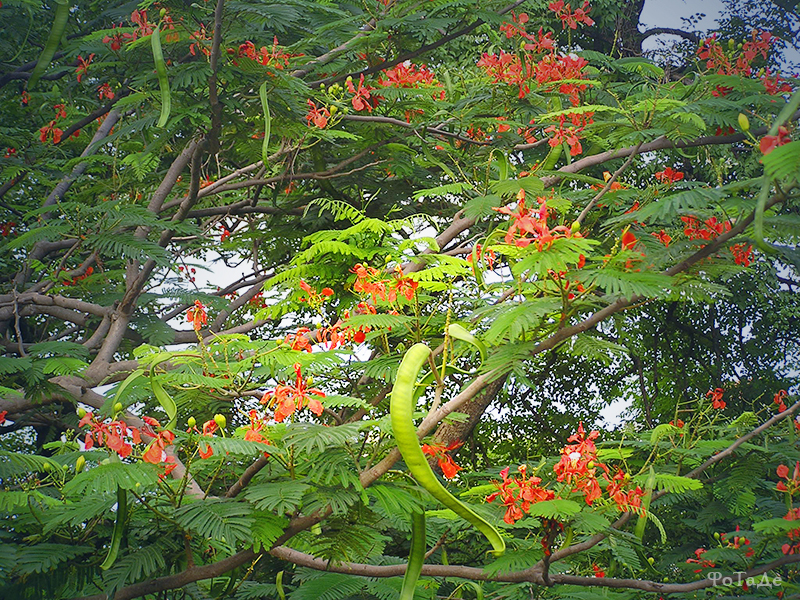
60. Делоникс королевский. Здесь видны не только его цветы, но интересные извивающиеся плоды в виде длинных стручков. Delonix regia. Not only its flowers are visible here, but also interesting wriggling fruits in the form of long pods. |
|
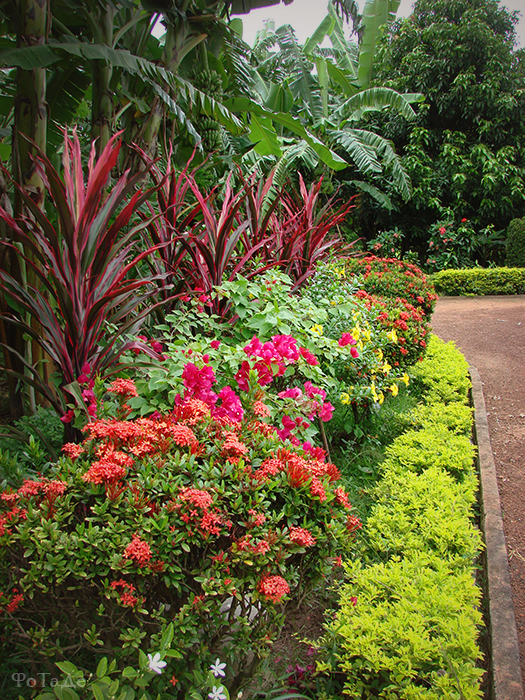
61. Тропическая клумба, на которой хорошо заметны Кордилина кустарниковая (слева высокие кусты с торчащими листьями с карминовой кромкой), знакомые нам уже по фотографиям выше иксора, бугинвиллия и алламанда, справа ряд светлых растений - Спирея японская, популярная и в наших краях, а снизу три белых цветочка похожи на Ратийю. На заднем плане самое узнаваемое растение - банановые деревья с гроздьями бананов (хотя бананы - это трава), а также можно увидеть куст гибискуса. Дерево справа с такого ракурса идентифицировать сложно, хотя очень похоже на манговое дерево. В любом случае буйство красок и яркость зелени поражает. This is a tropical flower bed with a shrubby Cordylina (on the left, tall bushes with protruding leaves with a carmine edge), familiar to us from the photos above ixora, bougainvillea and allamanda, on the right, a row of light plants - Japanese Spiraea, popular in Russian region, and from below, three white flowers look like Ratiya. In the background, the most recognizable plant is banana trees with banana fruits (although bananas are grass), and you can also see a hibiscus bush. The tree on the right is difficult to identify from this angle, although it looks very much like a mango tree. In any case, the riot of colors and the brightness of the greenery is amazing. |
|
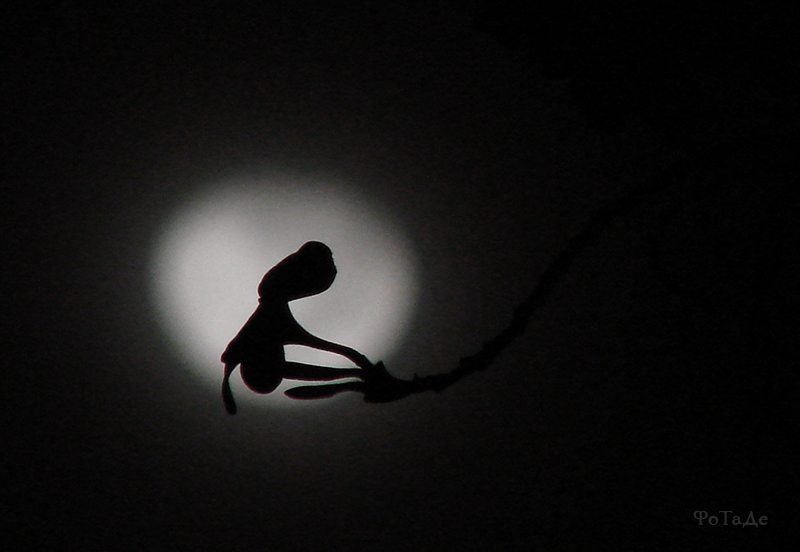
62. Этот снимок сделан в новогоднюю ночь 2006/2007: цветок плюмерии на фоне луны. Галерея получилась насыщенной, хотя видовое разнообразие в Камбодже, конечно, поражает, поэтому в данную галерею вошло далеко не всё. Тем не менее, закончить рассказ о камбоджийских цветочках захотелось именно таким мистическим кадром. Камбоджа - страна удивительная, полная красок и жизни. А чувство прекрасного кхмеры воспитывают как раз через умение восхищаться красотой обычного цветка... который для нас необычен, а для них это сама обычная жизнь и есть. This picture was taken on New Year's 2006/2007: a plumeria flower on the background of the moon. The gallery turned out to be rich, although the species diversity in Cambodia is, of course, amazing, so not everything is included in this gallery. Nevertheless, I wanted to finish the story about the Cambodian flowers with just such a mystical shot. Cambodia is an amazing country, full of colors and life. And the Khmer people cultivate a sense of beauty just through the ability to admire the beauty of an ordinary flower... which is an unusual flower for us, but for them, it is ordinary life itself. |
|
Источники кхмерских названий: Первые кхмерские названия растений были взяты с ресурса cambodia-picturetour.com, когда он ещё работал (сейчас сайт не существует, но частично сохранился в веб-архиве). Также очень помог аккаунт на Flickr'е LTR Farm с камбоджийскими растениями, к каждому из которых дано название на нескольких языках (не только на английском и кхмерском, но даже и на русском). Некоторые названия на кхмерском были верифицированы через запрещённые в России нельзябук и нельзяграм (в основном первый, но в социальных сетях камбоджийцев, пишущих на родном языке о флоре своей страны, очень и очень мало, поэтому ссылки на отдельные картинки не привожу). Sources of Khmer names: The first Khmer names of plants were taken from the resource cambodia-picturetour.com when it was still working (the site does not exist now, but it is partially preserved in the web archive). LTR Farm's Flickr account with Cambodian plants was also very helpful, with names given to each of them in several languages (not only in English and Khmer, but even in Russian). Some of the names in Khmer were verified through the banned FB and Inst in Russia (mostly the first one, but there are very, very few Cambodians writing in their native language about the flora of their country on social networks, so I do not provide links to individual pictures).
|